Starter cultures for sour cream, ayran and ryazhenka: cultural characteristics
· Maryna Petruk · 8 min read
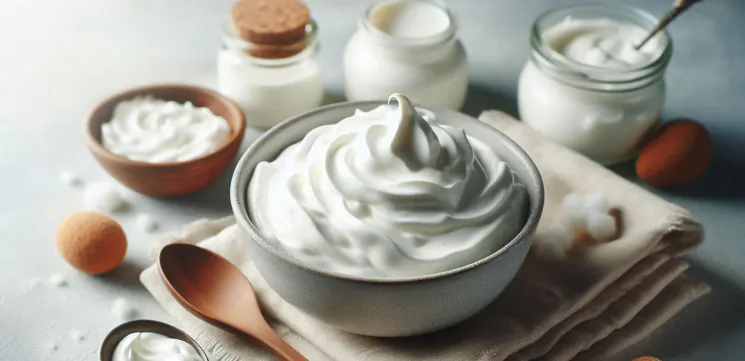
Traditional methods of producing fermented milk products
Sour cream is usually obtained by fermenting cream with lactic acid bacteria. Fresh cream sours at a certain temperature over several hours or days, which promotes the development of the natural lactic acid bacteria present in the environment. At dairies, pasteurised cream and highly concentrated starter cultures for sour cream are used, followed by incubation at a controlled temperature until the desired acidity and consistency are achieved. Lactic acid bacteria (mesophilic bacteria) give sour cream a uniform, creamy consistency and produce exopolysaccharides. The most common strains include Lactococcus lactis subsp. cremoris and Lactococcus lactis subsp. lactis. At a temperature of 20-25°C they effectively ferment lactose to lactic acid, creating a characteristic sharp, slightly buttery flavour and a thick consistency.
Ayran is a diluted yoghurt drink popular in the Middle East and Central Asia. In some regions it is fermented in large leather bags or clay pots for a unique flavour and texture. Classically, we first use starter cultures for yoghurt (thermophilic bacteria Lactobacillus delbrueckii subsp. bulgaricus and Streptococcus thermophilus, temperature 40-45°C), and then dilute with water to create a refreshing, piquant ayran.
Why starter cultures for ayran?
– Acidity: rapid production of lactic acid helps preserve the product and develop its characteristic flavour.
– Consistency: they create the thick, smooth texture of yoghurt before dilution.
– Additional probiotic strains (Lactobacillus acidophilus, Bifidobacterium) improve digestion and strengthen immunity.
Ryazhenka, a traditional Ukrainian drink, is made by fermenting baked milk. We begin by baking the milk at a temperature of 95-100°C for several hours, caramelising the lactose and proteins, which gives it its characteristic golden-brown colour and a sweet, rich flavour. Then we inoculate it with starter cultures for ryazhenka and hold it at a temperature of 30-35°C. The result is a thick, creamy drink with a unique, slightly sharp flavour.
Types of starter cultures for ryazhenka
- Mesophilic lactic acid bacteria (LAB) are well suited to fermentation at moderate temperatures and produce exopolysaccharides, ensuring a thick, uniform consistency. At the same time, lactic acid is produced more slowly than with thermophilic cultures, forming a milder, less sharp flavour that complements the sweet, caramelised notes of baked milk.
- Leuconostoc mesenteroides subsp. cremoris produce diacetyl for a characteristic buttery flavour.
- Additional probiotics are added to enhance the beneficial properties:
– Lactobacillus acidophilus
– Bifidobacterium bifidum
The importance of protective cultures
Protective cultures are added together with the main starter cultures during fermentation. They are selected on the basis of their ability to thrive alongside the main microflora, without competing with it and while complementing one another. They prevent the growth of pathogens that could spoil the product or pose a health risk, and maintain quality over a long period, thereby extending shelf life. Protective cultures improve the overall nutritional profile by producing vitamins and increasing the bioavailability of minerals.
The most common are:
– Lactobacillus rhamnosus: produces lactic acid and other antimicrobial substances (effective against Listeria and Salmonella).
– Propionibacterium freudenreichii: used mainly in cheese and fermented milk drinks, it produces propionic acid, which has preservative properties.
The cultural significance of dairy products in different regions
In Eastern Europe, thanks to its rich, creamy texture and piquant flavour, sour cream is a key ingredient in many traditional dishes: it is served with soups, stewed meat and vareniki.
Ayran has a special place in the culinary customs of Central Asia and the Middle East. Its popularity goes beyond its nutritional properties, as it symbolises hospitality and cultural heritage, and its preparation and consumption are an integral part of social gatherings and celebrations. It is valued for its cooling properties in the hot, arid climate of these regions.
Ryazhenka has deep roots in Ukrainian traditions and illustrates the importance of dairy products in the diet and culture of the region. Historically, ryazhenka was prepared in home kitchens in clay pots, which reflects the ingenuity and culinary resourcefulness of the people. Today it is still cherished as a soothing drink that is often associated with home and family. Its unique flavour and thick consistency make ryazhenka a versatile ingredient in various recipes or a hearty drink in its own right.
The influence of starter cultures on flavour and nutritional properties
The type of starter culture significantly affects the flavour and nutritional value of a fermented milk product:
– Sour cream: mesophilic cultures contribute to a creamy texture and a mild tang, and produce beneficial compounds (B vitamins and biologically active peptides) that increase the nutritional value of sour cream.
– Ayran: thermophilic cultures give a distinctive piquant flavour and a smooth texture, and improve gut health by adding probiotics that aid digestion and boost immune function.
– Ryazhenka: mesophilic cultures give a caramelised flavour and a thick, velvety consistency. The fermentation process improves the digestibility of milk proteins and increases the availability of essential nutrients such as calcium and magnesium.
Modern trends and innovations in the use of starter cultures
Recent advances in dairy technology have led to the development of new starter cultures and fermentation methods.
– There is growing interest in using probiotic cultures to enhance the beneficial properties of fermented milk products.
– Producers are experimenting with custom starter blends to create unique flavour profiles or textures and to offer specific functional benefits: increased viscosity or shorter fermentation time.
– Innovations in sustainable fermentation practices are becoming increasingly popular. These include the use of non-dairy substrates to reduce waste and minimising the environmental impact of dairy production.
The future of traditional dairy products and their starter cultures
– The globalisation of food markets makes it possible to enter new markets freely. However, it also requires production methods to be adapted to meet diverse consumer expectations and regulatory standards.
– Growing awareness of health and well-being is stimulating demand for dairy products with added nutritional properties. This trend will influence the development of new starter cultures that enhance the health-promoting properties of fermented milk products.
– Despite the drive towards modernisation, there is a strong movement to preserve the cultural heritage of traditional dairy products.
Thus, starter cultures play a key role in shaping the characteristics of fermented milk products. Their rich cultural heritage and modern innovations underline how indispensable they remain in our diet and traditions. Looking to the future, the challenge is to balance the preservation of traditional methods with the introduction of new technologies to meet changing consumer demands. And the highly concentrated French starter cultures from Bioprox and Biovitec will help you create a high-quality, standardised product from batch to batch. The experience and wide range of ingredients of Prodservis for producers of dairy and fermented milk products are always at your service.
FAQ
What is a starter culture?
A starter culture is a culture of microorganisms used to ferment dairy and other food products. It contains live bacteria or yeast that promote fermentation, creating the acidic environment needed to give the product its specific flavour, texture and aroma. Starter cultures are used in the production of foods such as yoghurt, sour cream, kefir, cheese and bread.
The main types of starter cultures:
1. **Lactic acid starter cultures**: Used for dairy products. They contain lactic acid bacteria such as Lactobacillus, Lactococcus and Streptococcus.
2. **Yeast starter cultures**: Used for baking bread and other flour products. They contain yeast, which helps the dough to rise.
3. **Combined starter cultures**: Include both bacteria and yeast, as in kefir, for example.
A starter culture is a key component in the production of many fermented products, giving them unique organoleptic properties and increasing their nutritional value.
Which culture strains are used in making sour cream?
Various strains of lactic acid bacteria are used in making sour cream, ensuring fermentation and the development of its characteristic flavour and texture. The main culture strains used for sour cream production include:
1. **Lactococcus lactis subsp. lactis**: Important for the formation of lactic acid and for creating the sour taste.
2. **Lactococcus lactis subsp. cremoris**: Also contributes to the production of lactic acid and helps shape the texture of sour cream.
3. **Leuconostoc mesenteroides subsp. cremoris**: Used to form diacetyl, which gives sour cream its characteristic creamy aroma.
4. **Lactococcus lactis subsp. diacetylactis**: Contributes to the production of diacetyl and has a significant influence on aroma and flavour.
These culture strains work together to provide the necessary level of acidity, consistency and organoleptic properties that make sour cream so popular.
Read also
- German technologist: what to produce tomorrow?
- Yoghurt production: from delicate texture to new product concepts with Prodservis
- European Insight: Tastes, Trends and New Products
- Marbled Beef Reimagined: Technology for Creating a Higher-Value Product
- Fertilisers for houseplants: how to choose and use them
