Why starter cultures are needed for sausage: a technologist's advice
· Oleksii Tovstenko · 9 min read
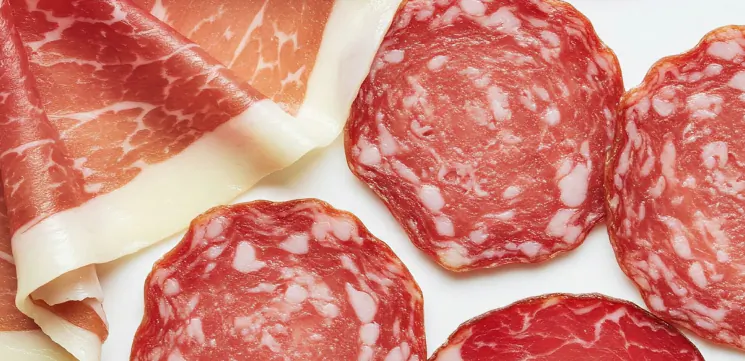
What are starter cultures for sausages?
From my many years of experience, I can say with confidence that starter cultures for sausage are real magic, allowing us to create masterpieces of meat production. Put simply, these are specially selected microorganisms, most often bacteria, which we add to the meat mince at the initial stages of production. They act as a kind of "catalyst" that starts and controls the fermentation and ripening processes.
Imagine you are baking bread. For the dough to rise and acquire the right structure and flavour, you need yeast. It is the same with sausage: starter cultures are our "yeast", ensuring the correct development of the product and giving it a unique flavour, aroma and texture.
The role of starter cultures in sausage
The role of starter cultures for sausages is hard to overestimate. They perform a whole range of key functions that make them indispensable in the production of many types of sausages, especially dry-cured and raw-smoked ones:
- pH control: perhaps one of the most important functions. Starter cultures produce lactic acid, which lowers the pH of the mince. This creates an unfavourable environment for the growth of harmful bacteria (for example, salmonella or staphylococci) and affects the colour stability and texture of the sausage. During fermentation, lactobacilli quickly lower the pH of the mince from approximately 5.8–6.0 to 4.8–5.2 (depending on the recipe). The acidic environment denatures the meat proteins and promotes better release of moisture, thanks to which the sausage acquires a dense structure and elasticity.
- Formation of flavour and aroma: the microorganisms in starter cultures break down proteins and fats in the mince, forming complex aromatic compounds, so that the sausage acquires its unique, deep and multifaceted flavour,
- Improved texture: fermentation promotes the release of moisture, which helps to form a dense, elastic and uniform structure of the sausage. It also affects slicing and overall visual perception.
- Faster ripening: starter cultures significantly shorten the time required for the sausage to ripen, which is economically beneficial and allows the product to reach the market faster.
- Colour formation and stabilisation: some bacterial strains, in particular Staphylococcus xylosus, promote the conversion of the myoglobin pigment into a stable pink-red form. This is especially important for dry-cured and raw-smoked sausages, where colour characteristics often influence the end consumer's perception of product quality.
- Control of dehydration and crust formation.
At the same time, thanks to fermentation, water is released gradually and evenly, which prevents the formation of mould and non-uniform colour spots on the outer surface of the sausages. - Extended shelf life.
The lower pH and active suppression of "bad" bacteria extend the shelf life of the finished product.
Thus, starter cultures for sausage act as a preservative, a flavour and aroma "master", and also guarantee the stability of the product from batch to batch!
Starter cultures for dry-cured and raw-smoked sausages
It is in the production of dry-cured and raw-smoked sausages that starter cultures for sausage reveal their full potential. These types of sausages are not heat-treated, so control of the microflora is critically important.
In dry-cured sausages, the bacteria from starter cultures work actively over a long period, gradually lowering the pH, breaking down the meat components and forming the famous "bouquet" of flavours and aromas for which we value these products so much. They also ensure product safety by suppressing the growth of pathogenic microorganisms.
In raw-smoked sausages, starter cultures help the meat to "accept" the smoke, promoting the formation of the desired colour and aroma, and additionally protecting the product from spoilage. Without them, the production of high-quality and safe dry-cured and raw-smoked sausages would be practically impossible.
For many years now, Prodservis has been working closely with the French manufacturer of Biovitec starter cultures. Thanks to its products, our clients always receive a high-quality, standardised product from batch to batch. The range includes:
- PRODALACT RP-RAP – A mixture of micrococci and lactobacilli with protective properties that accelerates the fermentation of whole-muscle meat and works at low-temperature regimes.
- PRODALACT MF 750 SAFE – A mixture of micrococci and lactic acid bacteria with protective properties. Prevents excessive acidity and forms a bright colour and the typical aroma of fermented sausages.
- PRODALACT MF 750 CF – A mixture of micrococci and lactic acid bacteria for fermented sausages with a production time of up to 21 days. Characterised by the dual activity of the culture mixture. Prevents excessive acidity and forms a bright colour and the typical aroma of fermented sausages.
- PRODALACT BC10 – A protective culture with a Lactobacillus Sakei strain, works at low-temperature regimes and suppresses the development of pathogenic microflora. Stabilises colour and prevents the appearance of micropores in the final product.
What can replace starter cultures in sausage
Frankly speaking, it is impossible to completely replace starter cultures for sausage with anything else while maintaining the same quality, safety and predictability of results. It is like trying to bake bread without yeast – it would be a completely different product.
In "pre-technological" times, people relied on the natural microflora of the meat and the production environment. It was a much riskier and less predictable process. Sausage often spoiled, and its flavour and quality varied greatly.
Some home-production enthusiasts may experiment with cultures from other fermented products (for example, kefir or sauerkraut), but this does not guarantee success. Such approaches can lead to uncontrolled growth of undesirable bacteria, spoilage of the product, or even sausage that is unsafe to eat. Therefore, as a technologist, I strongly advise against taking risks and recommend using proven starter cultures for sausages.
Here are a few alternatives:
Natural (spontaneous) fermentation:
We let the mince ferment on its own at room temperature of 18–22 °C, using the "local" microflora.
Pros: authentic flavour; at the same time – unpredictable acidity and more difficult quality control.
Cons: high likelihood of spoilage, spread of undesirable bacteria, instability of results from batch to batch.
Using acidic liquids or cultured products with their own flora:
Adding whey or kefir (10–15 % of the mince weight).
Pros: readily available, adds a lactic flavour note.
Cons: poor control of the microflora, possible off-odours, uneven acidity, absence of specific colour-forming strains.
Using a sourdough starter based on flour or cereals with local microflora:
For example, a mixture of rye malt or sprouted grain.
Pros: naturalness, interesting flavour; however…
Cons: it is impossible to guarantee the absence of pathogens, great instability.
Most importantly: none of these alternatives will fully replace the functionality of starter cultures for sausage. If we want to control the process and be confident in safety and stability, then replacing a traditional starter culture with "whatever is at hand" is always a certain risk.
If your goal is guaranteed safety, predictability and an identical flavour from series to series, there is no compromise – you need starter cultures for sausages.
A technologist's advice on choosing starter cultures
Choosing starter cultures for sausage is a responsible step that affects the final result. Here are a few tips from an experienced technologist:
- Determine the type of sausage: there are different types of starter cultures for dry-cured, raw-smoked and cooked-smoked sausages. Each has its own characteristics and "specialisation" (for example, for fast or slow ripening, for intense colour, for a specific aroma).
- Pay attention to the manufacturer: choose proven and reliable manufacturers of starter cultures. This guarantees the quality, purity and effectiveness of the culture.
- Temperature regime: some cultures work better at low temperatures, others at high ones. You should always choose the optimum temperature for bacterial growth.
- Fermentation speed: if you need a fast process, choose cultures with high activity. If you are aiming for slower, deeper ripening with complex flavour nuances, look for suitable cultures.
- Dosage: always follow the manufacturer's recommended dosage. Too little culture can lead to insufficient fermentation, too much – to excessive acidity or other undesirable effects.
- Storage: starter cultures are sensitive to storage conditions. Keep them in a refrigerator or freezer, as stated in the instructions, to preserve their viability.
In summary, it can be said with confidence that starter cultures for sausage are not just an ingredient but a whole world of microbiological processes that make it possible to create safe, tasty and high-quality meat products. They control fermentation, ensure safety, form a unique flavour and aroma, improve texture and speed up ripening.
Without them, modern production of dry-cured and raw-smoked sausages would be impossible or, at the very least, very risky. As a technologist with extensive experience, I always stress the importance of choosing and using starter cultures correctly. It is the key to the success of your product and to your satisfaction with it!
- Starter cultures for sausage are not a whim but a necessary tool for modern production. They set a controlled microbiological process and ensure safety, a stable flavour, colour and shelf life.
- The combination of lactic acid bacteria and bacteria of the genus Staphylococcus guarantees:
- A rapid drop in pH;
- Suppression of pathogens;
- Development of aroma;
- A stable pink colour of the meat;
- Even drying.
- Without starter cultures it is possible to produce dry-cured and raw-smoked sausages, but it is risky: unpredictable acidity, the possibility of spoilage and insufficient biological safety.
- Choosing the right culture requires attention to the composition of the strains, the temperature range, salt tolerance, the manufacturer's technical recommendations and your own trials on small batches of mince. It is equally important to monitor storage conditions and to follow the recommended dose precisely.
- Technologist's advice: check what works in your system, taking into account the recipe, the climate and the availability of equipment.
From my own experience I will say this: the right starter culture for sausage is the one that takes into account all the nuances of a specific production, from the composition of the spices to the ripening regime. If you find "your" combination, you will create high-quality, safe and tasty products that can compete even with the deep traditions of the sausage-making craft.
Wishing you success in making your sausages!
Read also
- German technologist: what to produce tomorrow?
- Yoghurt production: from delicate texture to new product concepts with Prodservis
- European Insight: Tastes, Trends and New Products
- Marbled Beef Reimagined: Technology for Creating a Higher-Value Product
- Fertilisers for houseplants: how to choose and use them
