Starter cultures for cheese and their importance in the production of high-quality dairy products
· Maryna Petruk · 9 min read
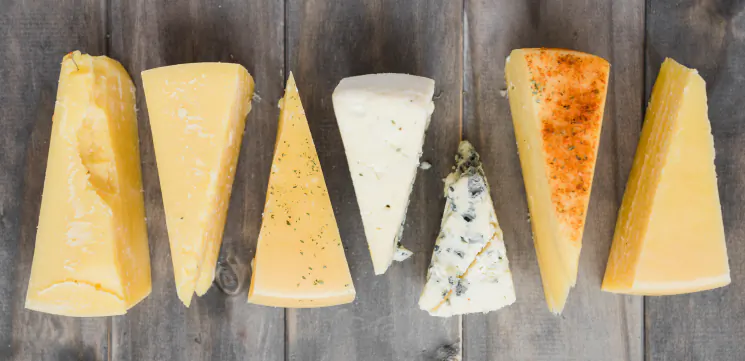
What cheese starter cultures are and their role in production
Starter culturesare pure cultures or mixtures of cultures of microorganisms used to make fermented milk products and cheese. These (lactic acid) bacteria convert milk sugar (lactose) into lactic acid. It is this acid that promotes the coagulation of milk, resulting in the formation of a cheese curd. The quality and biological value of the products depend on the type and composition of the microflora of the starter cultures.
How starter cultures work in cheese production
In simple terms, when you add a starter culture to milk, the bacteria begin to multiply actively, producing lactic acid to lower the pH level. This causes the proteins to coagulate and form a dense curd. The curd is then processed and the whey is pressed out to obtain various types of products.
Why are starter cultures important for cheese quality?
- Each bacterial strain gives its own unique flavour.
- They produce a variety of aromatic compounds for a complex and rich bouquet.
- They influence the texture, density, elasticity and structure.
- Lactic acid bacteria create an acidic environment in which harmful microorganisms cannot survive.
- They extend shelf life by preventing spoilage.
The main types of cheese starter cultures in industrial production
Today the food industry offers producers a wide variety of starter cultures designed for cheese production. Despite their common function – promoting the coagulation of milk and the formation of cheese – they differ significantly, determined by the composition of the bacteria and their physiological activity:
1. Composition:
- Monocultures: contain a single species (for example, Streptococcus thermophilus).
- Symbiotic cultures: interact with one another, enhancing each other's effect (for example, Streptococcus thermophilus + Lactobacillus delbrueckii subsp. bulgaricus).
2. Enzymatic activity: bacteria produce different enzymes, influencing the organoleptic characteristics.
3. Optimum temperature: a different optimum temperature is required for multiplication.
4. Rate of acid formation: they produce lactic acid at different rates, which affects the coagulation time and the speed of ripening.
5. Aroma-producing capacity.
6. Proteolytic activity: they break down proteins, influencing consistency and flavour.
9. Lipolytic activity: they break down fats, influencing aroma.
Mesophilic and thermophilic starter cultures
- Mesophilic: for soft cheeses (brynza, feta), giving them a slight tang and a soft texture (moderate temperatures of 20-30°C).
- Thermophilic: for hard cheeses (Cheddar, Parmesan), giving sharpness and a hard texture (higher temperatures of 40-50°C).
- Symbiotic: Swiss cheese and Emmental.
How to choose a starter culture for a particular type of cheese?
- First of all, it is very important to decide which type of cheese you plan to make, as this will affect the choice of strains. It is important that the starter culture promotes a rapid increase in acidity, the formation of curd and the separation of whey.
- Choose the desired organoleptic characteristics, as each culture brings its own "shades"; it is important to understand exactly what you want to obtain in the final product: a cheese with a tang or a creamy one, richly or moderately aromatic, and so on.
- The rate of acid formation and the optimum temperature must match the production process.
The technological process of using starter cultures in production
The technological process consists of the set of operations involved in adding special cultures to milk to initiate fermentation and for subsequent production.
Stages of cheese making using starter cultures
- Milk preparation.
In cheese-making practice, the milk must have a certain degree of maturity, that is, it is held at a certain temperature to change its physicochemical properties and microflora.
One of the important stages on the way to creating a high-quality cheese is cleaning the milk of impurities (since in production the raw material for a single batch may come from different sources), standardisation by fat and protein content, subsequent pasteurisation to destroy pathogenic microflora, and cooling to the optimum fermentation temperature depending on the chosen culture.
- Coagulation of milk and treatment of the cheese curd.
Cheese production technology is based on the process of milk protein coagulation. Depending on the type of cheese, coagulation can be brought about by using rennet or lactic acid bacteria. The latter, by creating an acidic environment, cause the milk to curdle spontaneously. To optimise the production of fermented milk cheeses, a temperature of 32-35°C is used, which ensures intensive multiplication of lactic acid bacteria and accelerated coagulation.
- Curd treatment.
The resulting cheese curd is cut into pieces to partially remove the whey. An optimal microclimate is ensured for the initiation and development of microbiological and biochemical processes in the cheese mass at the early stages of ripening. To stop the enzymatic processes and partially remove the whey, the cheese grains are heated (partial salting of the cheese mass is possible) and moulded into special forms.
- Moulding and pressing.
- Salting.
Salt takes part in forming the smell, consistency and flavour qualities. During salting, bacteriological processes slow down. This is important for preventing certain defects, for example early blowing.
- Ripening
A process during which complex biochemical transformations take place. During this period, additional microorganisms may develop (for example, Penicillium for blue-mould cheeses). Thus, starter cultures form the flavour, aroma, texture and consistency, and ensure stability during storage.
The influence of starter cultures on the texture and flavour of cheese
The selection and combination of starter cultures is a true art of cheesemaking. The strains interact with each other, forming various organoleptic characteristics. Let us look in more detail at several examples of such combinations:
Hard cheeses (cheddar, gouda):
- Lactococcus lactis, Streptococcus cremoris – develop owing to the high moisture of the cheese mass and the relatively low ripening temperature (12°C – 15°C). They quickly lower the pH of the milk, causing the formation of a dense curd. The addition of Streptococcus thermophilus increases acidity and influences the development of aroma.
- For some hard cheeses, propionic bacteria (Propionibacterium freudenreichii) may be added to produce the characteristic eyes.
Soft cheeses (camembert, brie):
- Lactic acid bacteria (Lactococcus lactis, Streptococcus thermophilus) form an acidic environment for the active development of white mould (Penicillium camemberti) on the surface. The mould breaks down proteins, giving a creamy texture and a characteristic aroma. Fat hydrolysis is carried out by the surface microflora.
- For some soft cheeses, yeasts may be added to form the rind.
Blue-mould cheeses (Roquefort, Gorgonzola):
- Lactic acid bacteria and blue mould (Penicillium roqueforti). The mould penetrates the cheese mass, forming characteristic blue veins, and breaks down fats and proteins, giving piquancy and a sharp note.
- The combination of different strains of mould and lactic acid bacteria makes it possible to obtain a variety of organoleptic nuances.
How do starter cultures affect the quality of dairy products?
Different types of bacteria and yeasts produce various substances that give a unique flavour profile.
Formation of flavour characteristics
- Lactic acid bacteria: break down milk sugar (lactose) into lactic acid, lowering the pH and creating tartness. In addition, they can produce other compounds (diacetyl) for a buttery aroma.
- Propionic bacteria: produce propionic acid – a nutty note and the formation of characteristic eyes.
- Penicillium fungi group: blue mould produces enzymes that break down proteins, creating piquancy.
Starter culture combinations:
- Hard cheeses: ensures rapid acid formation and the development of flavour and aroma qualities.
- Soft cheeses: the addition of the Penicillium fungi group creates the characteristic mould on the surface and gives a creamy texture.
- Blue-mould cheeses: the combination of lactic acid bacteria and Penicillium roqueforti creates the characteristic blue veins and piquant flavour.
Where to buy cheese starter cultures on an industrial scale?
Every cheesemaker faces this question at the beginning of their professional career. What will ensure the best possible result? Which manufacturer to choose? Which starter culture will suit my production capacity and solve my technological tasks?
Suppliers of starter cultures for industrial producers
Europe is one of the largest centres of cheese production in the world, and therefore one of the largest consumers of starter cultures. Although the specific leader may change over time due to various factors, several Scandinavian and Western European companies can traditionally be singled out among the leaders in this field. Among them, starter cultures from the French company Bioprox have been in demand for many years. A wide choice of cultures for different types of cheese will satisfy the needs of any production process. Our managers will help you select and buy high-quality starter cultures for cheese to meet the needs of your customers.
How to choose a high-quality starter culture for cheese production?
- Choose well-known and reliable manufacturers.
- The company should offer a wide range of starter cultures for different types of cheese.
- It is important that the supplier provides technical support to resolve any questions.
- Cost is also a significant factor when choosing a supplier.
- Use starter cultures with a guaranteed shelf life.
To sum up, we can see that the use of high-quality starter cultures:
- Guarantees the stability of the final product's quality: through the use of pure bacterial cultures, the influence of random microflora is eliminated.
- Ensures fast and predictable production: they make it possible to control the production process and obtain a product with specified characteristics.
- Allows the range to be expanded with different flavour and texture qualities.
- Increases product safety: they create unfavourable conditions for the development of pathogenic microflora.
FAQ
Where can I order starter cultures for cheese?
You can get professional advice and buy a high-quality cheese starter culture on our website. Contact us in any way convenient for you and receive the highest level of service!
How much does a cheese starter culture cost?
The cost may vary depending on a number of factors:
- Manufacturer: large international companies offer a wider range of products and prices for them.
- Type: Those specialised for certain types of cheese cost more.
- Pack size.
- Country of manufacture: imported ingredients are more expensive because of additional delivery costs and customs duty.
You can find out the cost of the starter culture you need by calling our managers or leaving a request on the website.
Which starter cultures are needed for cheese?
- The most commonly used are lactic acid bacteria. They are responsible for curdling the milk, forming an acidic environment and giving the characteristic flavour.
- Propionic bacteria: for cheeses with eyes (Emmental, Maasdam).
- The Penicillium group of fungi and Penicillium roqueforti: for cheeses with blue or white mould (Roquefort, Camembert).
- Yeasts: for washed-rind cheeses.
Which starter culture should be chosen for cheese?
Each type of cheese requires a specific starter culture, since different bacterial strains give flavour characteristics and affect the consistency (firm, soft, crumbly); the rate of acid formation affects the duration of ripening.
For beginners, it is better to choose simple recipes. Our managers will help you buy cheese starter cultures at the best price.
Read also
- German technologist: what to produce tomorrow?
- Yoghurt production: from delicate texture to new product concepts with Prodservis
- European Insight: Tastes, Trends and New Products
- Marbled Beef Reimagined: Technology for Creating a Higher-Value Product
- Fertilisers for houseplants: how to choose and use them
