What are food flavourings made from?
· Valerii Korolko · 6 min read
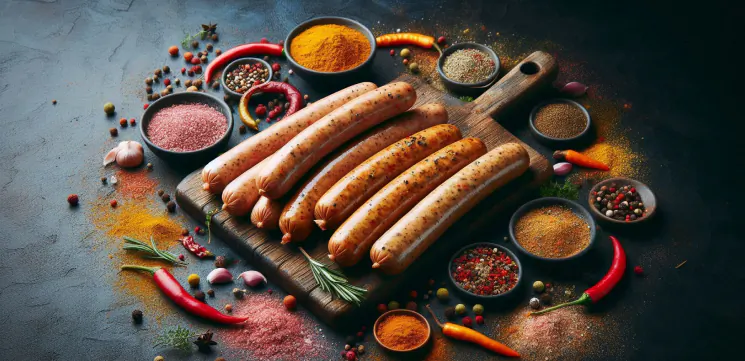
Main types of food flavourings
Natural flavourings are made from natural sources – fruits, vegetables, herbs or spices. They are obtained through various extraction methods, for example distillation or cold pressing.
Artificial flavourings are created synthetically in laboratories and imitate natural aromas. They are often cheaper to produce and make it possible to achieve specific aromatic characteristics that are difficult to reproduce with natural components.
Essence-based flavourings are obtained through various extraction methods (solvent extraction, distillation, maceration). They contain concentrated aromatic compounds from plant or animal sources.
Production of food flavourings
The production of food flavourings is a complex process that requires a high level of technological equipment and compliance with strict sanitary standards.
Obtaining natural flavourings:
- Extraction: aromatic substances are extracted from plant raw materials using solvents (water, alcohol, ethers).
- Distillation: aromatic substances pass into vapour and are then condensed.
- Pressing: used to obtain essential oils from citrus fruits.
Synthesis of artificial flavourings:
- Chemical synthesis: chemical reactions are used to create molecules that imitate natural aromas.
- Biotechnological methods: microorganisms are used to produce aromatic compounds.
Composition of flavourings:
- Blending: natural and synthetic aromas are mixed in certain proportions to obtain the desired flavour.
- Modification: to achieve more complex aromas, various technologies are used – fermentation and enzymatic modification.
Quality control:
- Physicochemical analysis: the composition and the absence of harmful impurities are checked.
- Sensory analysis: tasters assess the aroma, flavour and other organoleptic characteristics.
- Microbiological control: the absence of pathogenic microorganisms is checked.
Packaging is carried out in various containers depending on their purpose and volume. Storage is in a dark, cool place to avoid loss of aroma.
Main production equipment:
- Extractors: extraction of aromatic substances from plant raw materials.
- Distillers: obtaining essential oils.
- Reactors: carrying out chemical reactions.
- Mixers: creating compositions.
- Chromatographs: analysis of the composition of flavourings.
Important factors affecting the quality of flavourings
- Quality of raw materials
- Technological process: compliance with technological regimes ensures stable product quality.
- Modern equipment makes it possible to obtain a product of high purity.
- Staff qualifications guarantee a high-quality product.
Current trends in the use of food flavourings
Naturalness and health:
The growing demand for organic products encourages manufacturers to use natural flavourings from plants, fruits, berries and other natural sources.
Individualisation of flavour:
Modern technologies make it possible to create flavourings that match the specific taste preferences of different consumer groups. This opens up broad opportunities for developing unique flavour combinations.
Ethnic cuisine:
Consumers' interest in exotic cuisines encourages the use of flavourings that reproduce the taste of traditional dishes of different cultures.
Functional flavourings provide a pleasant aroma and have additional functional properties, for example antioxidant, anti-inflammatory or probiotic.
Vegan and vegetarian products:
The growing popularity of plant-based diets leads to the development of new flavourings for vegan and vegetarian products that imitate the taste of meat, cheese and other products of animal origin.
Reduction of salt and sugar:
Global trends towards healthy eating encourage manufacturers to reduce the salt and sugar content. Flavourings help to compensate for the loss of taste when the amount of these components is reduced.
The production of food flavourings is a complex and multifaceted process that requires a high level of technological equipment and compliance with strict sanitary standards. By using modern technologies and natural raw materials, manufacturers create flavourings that meet the highest standards of quality and safety. For its part, Prodservis imports only proven food ingredients for meat, dairy and vegan industry enterprises, so that you can provide your consumers with the best products.
Additional information:
– Nature-identical flavourings: This is an intermediate option between natural and artificial ones. They are created by chemical synthesis, but their molecular structure is identical to the molecules found in natural products.
– Allergic reactions: Artificial flavourings can cause allergic reactions in some people.
– Impact on health: To date, there is insufficient scientific evidence to confirm that artificial flavourings are harmful to health in the quantities in which they are used in food products. However, some studies link them to various diseases.
The choice between products with natural and artificial flavourings is a personal matter for each individual. When making a decision, take into account your preferences, budget and the availability of products.
FAQ
What is the difference between natural and artificial flavourings?
Natural flavourings are obtained from plant or animal products by extraction, distillation or other physical methods. They retain the natural taste and aroma of the original product.
Artificial flavourings are created by chemical synthesis. They can imitate the taste and aroma of natural products, but their molecular structure is different.
Which flavourings are considered the safest?
The question of flavouring safety is quite complex. Both natural and artificial flavourings undergo thorough testing before being used in the food industry. However, many people prefer natural flavourings, considering them "cleaner" and safer.
It is important to note that the safety of a flavouring depends on its specific composition and quantity, as well as on the individual reaction of the body.
Why are artificial flavourings used in products if natural ones exist?
There are several reasons:
- Cost: Artificial flavourings are, as a rule, cheaper to produce.
- Availability: Some natural flavourings may be seasonal or hard to obtain.
- Stability: Artificial flavourings are more stable and retain their properties for longer.
- Specific properties: Artificial flavourings can create unique flavour combinations that are difficult to achieve with natural ingredients.
How can you tell whether a product contains artificial flavourings?
- Label: Study the composition of the product. Natural flavourings are usually indicated with the source specified (for example, "vanilla flavouring"). Artificial flavourings may be labelled as "nature-identical flavouring" or simply "flavouring".
- Taste and aroma: Artificial flavourings often have a more intense and more uniform taste, unlike natural ones, which may have nuances and shades.
- Price: Products with natural flavourings are, as a rule, more expensive.
Read also
- German technologist: what to produce tomorrow?
- Yoghurt production: from delicate texture to new product concepts with Prodservis
- European Insight: Tastes, Trends and New Products
- Marbled Beef Reimagined: Technology for Creating a Higher-Value Product
- Fertilisers for houseplants: how to choose and use them
