How acidity regulators shape flavour
· Oleksii Tovstenko · 3 min read
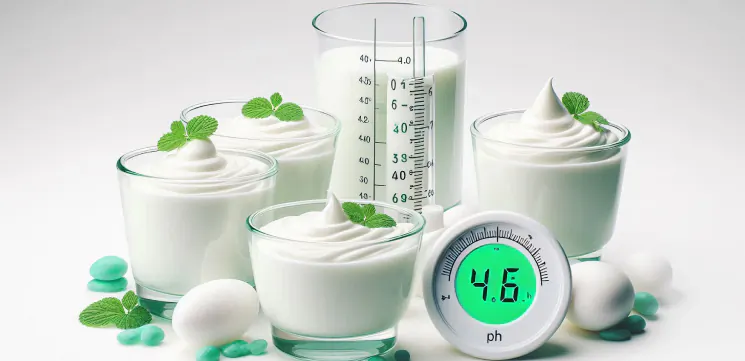
Flavour acidity regulators (pH regulator or acidulant) are substances used to maintain or change the acidity or alkalinity of a product. Common types include organic acids (citric, acetic), inorganic acids (phosphoric) and the corresponding salts (sodium citrate, potassium lactate).
Among the main roles we can highlight:
- Enhancing and adding a sharp, piquant note, which can accentuate other flavours or mask undesirable ones.
- Balancing sweetness and acidity: they balance contrasting tastes, creating harmonious sensations.
- Acidity affects texture and perception.
- Many fruits and vegetables keep their bright colour when treated with acidity regulators, as a low pH level prevents enzymatic browning.
Applications
Drinks and juices: citric or phosphoric acids create a refreshing tartness and stabilise pH, maintaining a consistent flavour and preventing the growth of microorganisms.
Bakery products: raising agents contain acidic components that react with alkaline bicarbonate, releasing carbon dioxide.
Meat processing:
- Lowering the pH inhibits the growth of harmful microorganisms such as Salmonella, Listeria monocytogenes and E. Coli, which extends the shelf life of products.
- Regulating the pH improves the water-binding capacity and emulsifying properties of proteins and tenderises the meat.
- They add a slight tang, improving the taste of meat products and hiding undesirable aftertastes.
- They help to preserve the bright colour of meat and prevent browning of smoked products.
Dairy industry: they lower the pH, reducing the risk of spoilage and the multiplication of pathogens, and ensuring stability throughout the entire shelf life.
Advantages and disadvantages
Advantages:
– They extend shelf life by preventing the multiplication of microorganisms.
– They improve organoleptic properties, making products more appealing.
– They are versatile and are used in many food products.
Disadvantages:
– Some synthetic regulators can be hazardous when consumed in large quantities.
– Excessive use leads to a taste that is too tart or sour.
– High acidity hinders the absorption of certain nutrients.
– Consumers often prefer products without artificial additives.
Trends and innovations
The food industry continues to introduce innovations in the use of acidity regulators, driven by consumer demand for healthy, natural products:
- Demand for natural acidulants (vinegar and lemon juice) is growing.
- Microencapsulation technologies are being developed to control the release of acids.
- They are combined with other functional ingredients to improve efficiency.
- They are becoming the subject of stricter control by regulatory bodies.
- It is important to obtain acidity regulators from sustainable sources, such as citrus processing waste.
Acidity regulators play a key role in the food industry, ensuring safety, stability and taste quality. Their ability to enhance or balance flavours, maintain freshness and improve texture makes them indispensable in food production. And the technologists at Prodservis will help you choose the right ingredients for your production. A range of over 350 items will satisfy even the most demanding customer.
Read also
- German technologist: what to produce tomorrow?
- Yoghurt production: from delicate texture to new product concepts with Prodservis
- European Insight: Tastes, Trends and New Products
- Marbled Beef Reimagined: Technology for Creating a Higher-Value Product
- Fertilisers for houseplants: how to choose and use them
