How to Choose Food Ingredients for the Meat Industry: Stabilisers, Preservatives and Colourants
· Oleksii Tovstenko · 6 min read
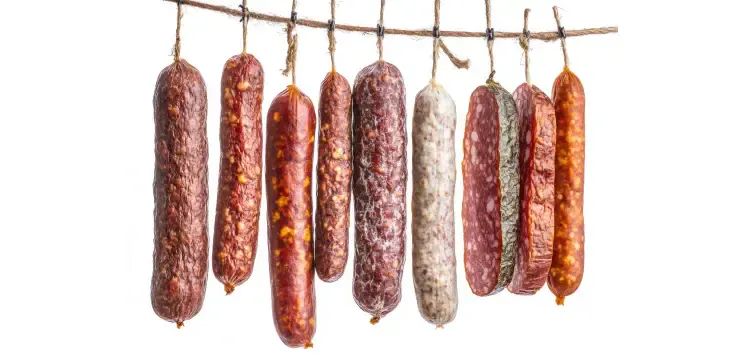
Key ingredients for the meat industry
The basis of any meat product is, of course, meat. But to turn it into tasty sausage, ham or frankfurters, other components are needed too. Let us take a look at the technology of sausage production and all the ingredients for making sausage.
The role of food additives in the production of meat products
- extend shelf life;
- improve texture;
- enhance flavour and aroma;
- preserve colour;
- improve nutritional value.
Key types of food ingredients for the meat industry
- Food additives of the preservative class: sodium nitrite (E250), ascorbic acid (E300), potassium sorbate (E202), sodium benzoate (E211), nisin (E234), natamycin (E325).
- Stabilisers and emulsifiers: phosphates, carrageenans, guar and xanthan gum, mono- and diglycerides of fatty acids.
- Antioxidants: ascorbic acid and isoascorbate protect fats from oxidation.
- Flavour enhancers: monosodium glutamate (E621).
- Food colourant: carmine, fermented rice, paprika.
Stabilisers in the production of meat products
Stabilisers are substances that preserve structure and prevent separation and water release. They are especially important in the production of emulsified sausage products.
How do stabilisers affect the texture and shelf life of meat products?
Texture:
- Promote gel formation in the meat for a uniform texture and to prevent juice release.
- Increase viscosity, giving the product a denser and juicier consistency.
- Improve the water-holding capacity of meat, preserving juiciness and tenderness.
- Prevent syneresis.
Shelf life of meat products:
- Prevent oxidation: thanks to their antioxidant properties, which slow down the oxidation of fats, they extend shelf life.
- Protection against microorganisms: they create a protective film on the surface that prevents microorganisms from penetrating and pathogenic flora from developing.
Stabilisers for sausages: ensuring uniformity and stability
- Phosphates: increase the water-holding capacity of meat and promote gel formation.
- Carrageenans: stabilise emulsions and add viscosity.
- Guar and xanthan gum: thickener, stabiliser.
- Mono- and diglycerides of fatty acids: help to obtain a uniform mass from substances that do not combine in nature.
Preservatives in the meat industry
Food preservatives are a special type of food additive that protects meat and sausage products from harmful bacteria, mould and yeasts.
Food preservatives: extending the shelf life of meat products
Sodium nitrite (E250): protects against botulism and gives the characteristic colour, but has dosage limits.
Ascorbic acid (E300): antioxidant.
Potassium sorbate (E202): against mould and yeasts, especially for products with a high fat content.
Sodium benzoate (E211): for products with increased acidity, against yeasts and bacteria.
Nisin (E234): a natural preservative against Gram-positive bacteria.
Natamycin (E325): against moulds and fungi.
How to choose preservatives for industrial sausage production?
First of all, a microbiological risk analysis should be carried out:
- Identify the main microorganisms that can cause spoilage.
- Assess the level of contamination of the raw materials and the production conditions.
Depending on the results, you will understand which type of food preservative and at what dosage is best to use. And our meat technologists will help you make the right choice. 30 years of experience working with large meat processing enterprises allows us to select the best options depending on your sausage production technology.
In practice, the most commonly used are:
- Cooked sausage group: a combination of sodium nitrite and ascorbic acid to ensure safety and colour stability.
- Smoked and raw-smoked sausages: potassium sorbate, sodium benzoate, and also sodium nitrite for protection against mould.
- Canned meat: depending on the type of product and sterilisation conditions.
Remember: the use of preservatives must be justified and comply with regulatory requirements.
Food colourants in meat products
In the meat processing industry, food colourants are used to maintain the natural colour of meat, mask undesirable shades and create a more attractive appearance.
Which food colourants are used in the meat industry?
- Natural: carmine (cochineal insects), paprika (chilli pepper), beetroot juice, fermented rice.
- Synthetic: E129
How does a food colourant affect the appearance and appeal of a product?
Thanks to the use of food colourants, you can create an appetising look, a bright and even colour to increase appeal to the consumer. We all know that the natural colour of meat is associated with freshness and quality. The use of certain colours can create a unique brand image.
Sausage production technology and the role of food additives
In sausage making, additives help to:
- Improve texture, making sausage juicy, tender or firm.
- Increase the yield of the finished product through better water retention.
- Extend shelf life and protect against spoilage caused by microorganisms.
- Give an attractive appearance, uniform colour and gloss.
- Improve taste.
How do food additives improve the production process?
Thus, by using quality ingredients, you will help your enterprise to standardise quality (uniform in taste, colour and texture), improve organoleptic properties and optimise the production process (simplify technological operations and increase the yield of finished products).
The importance of stabilisers, preservatives and colourants in sausage production
Each of these groups of additives performs its own specific functions:
Stabilisers and emulsifiers: ensure a uniform texture, retain moisture, stabilise emulsions and improve processability.
Preservatives: extend shelf life, ensure safety and preserve colour.
Colourants: maintain the natural colour, mask defects and create the desired shade.
So, if you are interested in more detailed information about the technological process of producing meat and sausage products, or in selecting quality ingredients to create competitive products, contact our managers in any way convenient for you: by phone, messengers, email and so on. They will help you buy food colourants and everything for making sausage. Our online shop offers everything for sausage products. Find out the current price of ingredients for making sausage.
FAQ
Which food stabilisers are used in sausage production?
The most common are phosphates, carrageenans, and guar and xanthan gum.
How do preservatives affect the shelf life of meat products?
Preservatives in the food industry extend shelf life by suppressing the growth of bacteria, mould and yeasts.
Which food colourants are the safest for use in the meat industry?
The safest are considered to be carmine, paprika, beetroot juice and fermented rice. You can buy quality food colourants in our online shop, where you will find everything for sausage production.
Do stabilisers affect the texture and taste of meat products?
They affect not only the texture but also the taste. Some of them can give a slight sliminess, while others slightly alter the taste.
Which food additives are used to improve sausage production technology?
In addition to stabilisers, preservatives and food colourants, you can also buy:
- Flavourings: to enhance or change the taste.
- Flavour enhancers: to emphasise the natural taste.
- Antioxidants: protection against oxidation.
Acidifiers: regulation of acidity.
Read also
- German technologist: what to produce tomorrow?
- Yoghurt production: from delicate texture to new product concepts with Prodservis
- European Insight: Tastes, Trends and New Products
- Marbled Beef Reimagined: Technology for Creating a Higher-Value Product
- Fertilisers for houseplants: how to choose and use them
