How do flavourings help create modern food products?
· Valerii Korolko · 6 min read
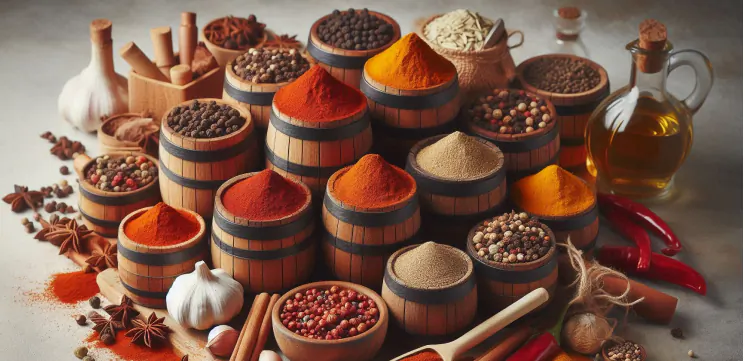
Types of food flavourings
Types of food flavourings by source of origin:
- Natural flavourings are obtained from natural sources (fruit, vegetables, spices, herbs and products of animal origin) by physical, microbiological and enzymatic processes. They are used without additional processing, evaporate faster, lose their properties during storage/processing and have a shorter shelf life.
- Synthetic: chemically synthesised, designed to reproduce the taste and aroma of natural ingredients, to create entirely new ones at a lower price, or to achieve a flavour that is not easy to obtain from natural sources.
By form:
- Liquid (oil (flavouring of fat-soluble products) and extracts (water/alcohol solutions – baking, beverages, confectionery).
- Powdered (breakfast cereals, baking mixes, soups and spray-dried (dry sprayed flavourings obtained by spraying in a drying chamber, for even distribution of aroma).
- Pastes (thick consistency – confectionery, creams, fillings) and gels (yoghurts, desserts).
- Encapsulated (microcapsules and nanocapsules). They retain their properties better during heat treatment, freezing and long-term storage, increasing the stability of flavour and aroma throughout the shelf life, which is especially important in industrial production.
- Granules (solid particles used in dry mixes and products where long-term aroma retention is required).
- Solutions (water/alcohol-based, easily mixed with other ingredients) and suspensions (fine particles suspended in a liquid)
Production technologies
The production of food flavourings involves various approaches, from traditional extraction methods to modern biotechnological processes.
- Extraction and distillation: Natural flavourings are often obtained by steam distillation, solvent extraction or cold pressing.
- Chemical synthesis: Synthetic flavourings are produced by combining various chemical compounds to form the desired flavour profile.
- Biotechnology and fermentation: Modern methods include adding microorganisms to produce aromatic compounds by fermentation.
The role of flavourings in the food industry
An indispensable ingredient in all branches of the food industry for achieving several main goals:
Improving taste and smell: they enhance natural notes and add new flavour notes.
Masking unpleasant odours and tastes.
Reproducing natural aromas: where the use of natural ingredients is too expensive or impossible, they make it possible to reproduce natural tastes and aromas.
Ensuring the stability of aroma and flavour throughout its shelf life.
Introducing innovative products and new flavours.
Reducing sugar and salt content without loss of taste quality.
Increasing the appeal of sensory characteristics.
Economic benefit: it is possible to reduce the cost of natural ingredients and improve the appeal of the product, which leads to higher sales.
Thanks to all these properties, they are an integral part of modern food production, ensuring high quality, stability and appeal of products.
Use of flavourings in different products
High-quality food flavourings are an indispensable attribute of any food production today. In the manufacture of sausages, they form the characteristic taste and aroma of the final product. In the meat processing industry, the most widely used are natural and artificial flavourings. Natural ones include spices, herbs and natural smoke (the characteristic smoke aroma of smoked sausages). Artificial ones include: smoke imitation (synthetic, used to give a characteristic smoky aroma without the need for actual smoking), flavour enhancers (monosodium glutamate, sodium inosinate and guanylate to enhance the natural taste), synthetic spice flavours (garlic, onion, pepper, etc.), complex aromatic blends (already containing all the necessary aromas in optimal proportions), extracts and essences, and liquid smoke flavours (for a smoky taste without the actual smoking process).
Adding flavourings helps sausage producers ensure stable organoleptic properties that meet consumer expectations, while maintaining production efficiency and cost-effectiveness.
For ice cream, yoghurts and flavoured dairy drinks, fruit and sweet flavourings are often used: vanilla (as vanilla extract and as a synthetic substitute), fruit extracts (strawberry, raspberry, blueberry), cocoa and caramel.
In soft drinks, juices, teas and alcoholic drinks – to provide a refreshing and lasting taste.
In sweets, chocolate, crisps and bakery products – to create sweet, salty or unique taste sensations.
Flavourings and consumer preferences
Many consumers are becoming more attentive to their health and prefer products with natural or organic ingredients. This shift is prompting the industry to develop products with clean labels and fewer artificial additives. Interest in new and unusual flavours is also growing under the influence of world cuisines and culinary innovation. Consumers are looking for products that match their individual tastes and dietary needs. This has led to the development of flavour additives that complement functional products, for example those high in protein or with added vitamins.
Innovations and the future of flavourings
- Artificial intelligence in flavour creation: AI is used to analyse consumer preferences and predict successful flavour combinations. This technology can speed up the development of new organoleptic characteristics and adapt them to specific market needs.
- Sustainable production includes the use of renewable resources, waste reduction and the development of environmentally friendly extraction methods.
- Focus on health and well-being: The industry is increasingly focusing on creating flavourings that match health and healthy lifestyle trends. This includes reducing the sugar, salt and fat content of flavoured products while maintaining taste quality.
- The multisensory experience in the food industry refers to the simultaneous impact on different human senses (sight, smell, taste, touch, hearing) to create a fuller and more engaging perception of products. Food flavourings play an important role in creating such an experience, providing a multifaceted range of tastes and aromas.
Flavourings are of great importance for modern food production, offering a way to improve and diversify the taste and aroma of food and drinks. With the continuous development of technology and a deeper understanding of consumer preferences, the future of flavourings promises exciting opportunities for both producers and consumers. For its part, Prodservis makes every effort to develop the industry and offers its customers not only high-quality ingredients from European manufacturers, but also its own knowledge base to achieve the best possible result at your production facility.
FAQ
How are flavourings distinguished by form?
- Liquid
- Paste and gel
- Encapsulated
- Granules
- Solutions
Read also
- German technologist: what to produce tomorrow?
- Yoghurt production: from delicate texture to new product concepts with Prodservis
- European Insight: Tastes, Trends and New Products
- Marbled Beef Reimagined: Technology for Creating a Higher-Value Product
- Fertilisers for houseplants: how to choose and use them
