Condensed Milk Production: Everything You Need to Know in 2025
· Svitlana Nazimok · 14 min read
What condensed milk is and why it remains popular
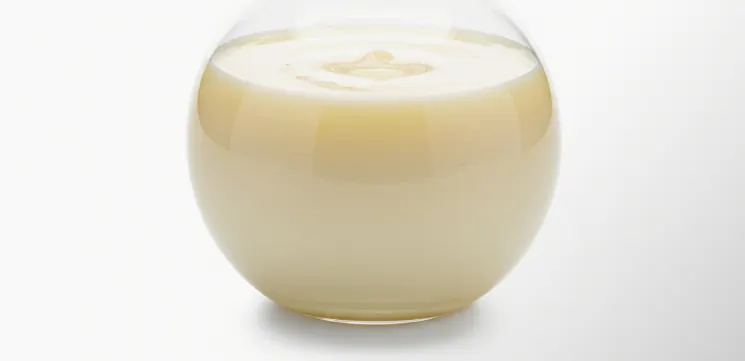
Condensed milk is a concentrated dairy product obtained by partially removing water from milk, followed by the addition of sugar (for sweetened condensed milk) or without it (for unsweetened condensed milk). It is the sugar that adds sweetness and creates an environment in which microorganisms do not multiply, which makes this product extremely resistant to spoilage. Condensed milk is therefore characterised by high energy value and a rich flavour. Thanks to its high concentration of solids and sugar, it has a long shelf life without the need for refrigeration.
Its popularity is explained by several factors:
- Versatility: it is used as a stand-alone dessert and as an ingredient in baking, creams, coffee, tea and many other dishes.
- Long shelf life: convenient for stocking up and for transportation.
- Sweet taste and creamy texture.
- Ease of use: it requires no special preparation and is ready to eat.
Moreover, in 2025 there is growing interest in options with reduced sugar or enriched with vitamins, which makes it possible to satisfy even the most demanding consumer.
Fundamental differences between condensed milk made with animal (milk) fats and with vegetable fats.
Condensed milk made with animal (milk) fats (classic condensed milk)
Traditional "condensed milk" or "sweetened condensed whole milk".
Raw materials:
- Cow's milk: the only source of fat is the milk fat contained in the milk.
- Sugar (for sweetened condensed milk).
Key features:
- Definition and standards: According to national and international standards, "condensed milk" is a product made exclusively from milk of animal origin. The addition of any vegetable fats automatically excludes the product from the "condensed milk" category and moves it to the category of "milk-containing product" or "condensed product".
- Fat composition: it has a unique fatty acid composition (mainly saturated and monounsaturated, with a small percentage of polyunsaturated), cholesterol and vitamins (A, D, E, K). This composition determines its organoleptic properties and nutritional value.
- Taste and aroma: a characteristic, rich milky taste and aroma resulting from complex biochemical processes in the milk and its heat treatment.
- Texture: it has a uniform, thick, creamy consistency. Correct crystallisation of lactose ensures there is no "grittiness".
- Nutritional value: it contains complete milk protein, milk fat, lactose, vitamins and minerals (calcium, phosphorus, etc.). It is a complete dairy product.
- Cost: generally higher because of the cost of natural dairy raw materials.
Technological nuances:
- The process of evaporating water and adding sugar (if it is a sweetened product) is key.
- Particular attention is paid to heat treatment in order to preserve the milk proteins and prevent coagulation.
Condensed product (milk-containing product) with vegetable fats
These products are often called "zgushchenka", "condensed product", "condensed with vegetable fat" or similar names, to distinguish them from genuine condensed milk. Legislation requires the label to state clearly that it is not "milk" but a "milk-containing product" or a "condensed dairy product with added vegetable fats".
Raw materials:
- Skimmed milk or skimmed milk powder: the source of milk protein.
- Vegetable fats: instead of milk fat, various vegetable oils are used (palm, coconut, sunflower, rapeseed and blends of these).
- Sugar.
- Stabilisers, emulsifiers and flavourings may be added to imitate the properties of milk fat.
Key features:
- Price: vegetable fats are significantly cheaper than milk fat (lower production cost).
- Fat composition: depends entirely on the type of vegetable fats used. No cholesterol.
- Taste and aroma: may differ from classic condensed milk. They are often less rich, and may have a specific aftertaste of vegetable fats or a "cardboard" aftertaste caused by fat oxidation. Flavourings are sometimes used to imitate the milky taste.
- Texture: may be less stable and prone to separation or, conversely, too thick and jelly-like, depending on the recipe and the stabilisers used.
- Nutritional value: differs from classic condensed milk. The protein content may be similar, but the fat profile is radically different. The absence of cholesterol may be an advantage for some diets, but trans fats may also be present.
- Labelling: it is important to pay attention to the label! Always check the composition of the product. If the ingredients include "vegetable fats", "vegetable oils" or "milk fat substitute", it is not classic condensed milk.
Technological nuances:
- The technology requires careful selection of vegetable fats and their blends in order to achieve the desired consistency and emulsion stability.
- The use of additional emulsifiers and stabilisers is often necessary to prevent separation of the fat and water-protein phases.
- Hydrogenation processes may be used to give vegetable oils a solid consistency, which can lead to the formation of trans fats (there is now a drive to minimise them).
Main differences: comparison table
| Feature | Condensed milk with animal fats (classic) | Condensed product with vegetable fats (milk-containing) |
| Fat base | Exclusively milk fat (from cow's milk). | Vegetable oils (palm, coconut, sunflower, etc.) combined with skimmed milk. |
| Name | "Sweetened condensed whole milk", "Condensed milk", etc. | "Zgushchenka", "Condensed milk-containing product", "Condensed product", etc. |
| Legislation | Regulated as a dairy product. | Regulated as a milk-containing product; must be clearly distinguished from dairy products. |
| Price | Usually higher. | Usually lower. |
| Taste/Aroma | Rich milky, creamy, characteristic of milk. | May have an aftertaste of vegetable fats, a less pronounced milky taste, sometimes with flavourings. |
| Texture | Uniform, thick, creamy, without "grittiness" (when properly produced). | May be thinner or thicker, prone to separation, or with added stabilisers. |
| Cholesterol | Contains it (natural for milk fat). | Does not contain it. |
| Trans fats | Absent (apart from traces of natural trans fats found in milk). | May be present if partially hydrogenated oils are used (however, their use is now strictly limited). |
| Nutritional value | Complete milk protein, vitamins, minerals. | Protein composition depends on the amount of milk; the fat profile is different. |
The main stages of condensed milk production
How is condensed milk made? Industrial production of condensed milk is a complex but well-established technological process that includes several key stages:
- Milk reception and cleaning: everything starts with high-quality raw materials. The milk arrives at the plant, undergoes thorough quality control (fat content, protein, density, acidity, absence of antibiotics) and is cleaned of mechanical impurities.
- Standardisation: at this stage the fat and protein content of the milk is adjusted to the required standards, which ensures stable quality of the final product. This can be achieved by adding skimmed milk or cream.
- Heat treatment (pasteurisation or sterilisation): to destroy pathogenic microorganisms and inactivate enzymes, which ensures product safety and extends its shelf life, the milk is heated to a certain temperature for a certain time. Pasteurisation is often used for sweetened condensed milk, and sterilisation for sterilised condensed milk.
- Concentration (evaporation): this is the heart of the condensed milk production process. The milk is fed into vacuum evaporators, where, owing to reduced pressure, water evaporates at a lower temperature than usual. This makes it possible to preserve the nutrients and taste qualities of the milk while concentrating it to the desired level of solids. At this stage sugar (if required) is added in the form of sugar syrup. It gives a sweet taste and acts as a preservative, reducing water activity and preventing the growth of microorganisms.
- Cooling: after evaporation the condensed milk is at a high temperature. It is cooled quickly to prevent the growth of undesirable microorganisms and to ensure correct crystallisation of lactose (for sweetened condensed milk).
- Lactose crystallisation (for sweetened condensed milk): this stage is critically important for obtaining the desired texture. Controlled crystallisation of lactose (milk sugar) prevents the formation of large crystals that can be felt as "sand" in the mouth. For this purpose, special crystallisers are used, in which the product is slowly stirred during cooling.
- Filling and packaging: the finished condensed milk is filled into various types of container (tin cans, doy-packs, tubes, glass bottles, etc.). The quality of the packaging is of great importance for preserving the freshness and properties of the product.
- Quality control: thorough quality control is carried out at all stages of production, from raw materials to the finished product. Physicochemical indicators, microbiological purity and organoleptic properties are checked.
Which additives are used in the production of condensed milk with vegetable fats
In the industrial production of condensed milk, in addition to the main ingredients (milk and sugar), certain additives may be used to improve quality, provide stabilisation and extend shelf life. It is important to understand that all permitted additives undergo strict control and are safe for consumption.
- Granulated sugar or sugar syrup: the main additive for sweetened condensed milk made with vegetable fats.
- Lactose (milk sugar): added for controlled crystallisation and to improve texture.
- Stabilisers: can be used to prevent the product from separating, especially in unsweetened condensed milk (made with vegetable fats) or condensed cream. They help to stabilise milk protein during heat treatment and storage.
- Acidity regulators: Sometimes citrates or other permitted regulators can be used to correct pH, in order to ensure optimal conditions for the production process and for product stability.
- Vitamins and minerals: In some cases, especially for baby food or specialised products, condensed milk may be fortified with vitamins or minerals.
- Flavourings and flavour additives: Natural or nature-identical flavourings can be added to create various types of condensed milk.
Recommendations for condensed milk production
We offer our customers the food stabilisers Prodamul SW-09 (Noveis) and Prodamul WF-501 (Ingrema AG) – two types of stabilisers widely used in condensed milk production to improve texture and emulsion stability, prevent the product from separating and give a uniform consistency without syneresis.
- If the priority is no perceptible additives in the taste and the highest gel density, choose Prodamul SW-09 (Noveis).
- If a stable emulsion and minimising the "fatty" aftertaste while reducing the cost price are important, Prodamul WF-501 (Ingrema AG) will help.
- Combined approach
Some producers combine both systems: SW-09 carrageenan to form the gel "framework" and prevent syneresis + WF-501 for additional fat stabilisation and a reduced fatty aftertaste. These stabilisers genuinely improve the quality of condensed milk, make it possible to optimise the production process and ensure consistent parameters in the final product.
What are the特 features of production in 2025
In 2025, industrial condensed milk production continues to evolve, adapting to new technologies, consumer requirements and environmental standards. Here are several key features that distinguish modern production:
Automation and digitalisation: Modern plants increasingly use automated production control and management systems. This leads to higher efficiency, lower costs and minimisation of the human factor.
"Smart Factories" and AI:
- Predictive maintenance: Artificial intelligence (AI) and "Internet of Things" (IoT) systems play an ever greater role.
- Real-time process optimisation: AI algorithms analyse data from sensors at every stage of production (temperature, pressure, viscosity, dry matter content) and can make adjustments in real time to maintain optimal parameters, increasing product yield and quality.
- Quality control: artificial intelligence can be used for fast and accurate analysis of the quality of raw materials and the finished product, identifying deviations and potential problems at early stages.
Energy efficiency and sustainability: The aim is to reduce the carbon footprint and minimise the impact on the environment.
- Water recovery and "zero waste": plants are actively introducing systems for recovering water from the evaporation process (condensate) and for treating wastewater for reuse. Technologies are developing for processing by-products (for example, permeate after ultrafiltration) into valuable components or biogas, moving towards a "zero waste" model.
- Reducing the carbon footprint: in addition to energy efficiency, this includes optimising logistics, using environmentally friendly packaging and even monitoring greenhouse gas emissions at the farms that supply milk.
- Recyclable and biodegradable packaging: producers are actively seeking and introducing new types of packaging that are more environmentally friendly, for example packaging made from recycled plastic, biodegradable materials or materials that are easy to recycle.
Customised formulations and functional ingredients:
- Growth of the alternatives market: In view of the growing demand for plant-based alternatives to dairy products, producers are actively developing and improving technologies for producing condensed milk based on plant ingredients. This may be condensed oat, almond, coconut, soy milk and so on.
- Technological challenges: The main challenges here are achieving the same texture, stability and flavour profile as traditional condensed milk. This requires the use of special stabilisers, emulsifiers and sometimes hydrocolloids to achieve the desired consistency.
- Innovation in raw materials: Searching for new plant sources and optimising their processing to obtain better raw materials for condensed products.
- Reduced sugar / sugar-free: In line with consumer demand for healthier eating, condensed milk formulations are being developed with reduced sugar content or with no sugar at all (using sugar substitutes or natural sweetness).
- Fortification: Condensed milk may be fortified with vitamins, minerals, probiotics or other functional ingredients to increase its nutritional value.
- Niche products: Development of specialised products for particular dietary needs (for example, lactose-free condensed milk for people with lactose intolerance).
- Demand is growing for products with a minimum of artificial additives and preservatives. Condensed milk producers are seeking to simplify the composition as much as possible, using only natural ingredients that are recognised and understandable to the consumer.
Improved packaging technologies: in 2025, the development of innovative packaging solutions continues, ensuring not only product safety and preservation but also convenience for the consumer, as well as environmental friendliness. These may be lighter materials, fully recyclable packaging or biodegradable options. "Smart" packaging with freshness indicators is also appearing.
Global quality and safety standards: condensed milk producers operate in accordance with the strictest international food quality and safety standards (for example, ISO 22000, HACCP). This includes traceability of products from farm to shop shelf, which gives consumers confidence in the quality and safety of the product.
Use of membrane technologies: some producers already use membrane technologies such as ultrafiltration and nanofiltration. They make it possible to concentrate milk and separate its components more efficiently, which can improve the quality of the final product and reduce energy consumption:
- For pre-concentration: This has already been mentioned, but membrane technologies (ultrafiltration (UF), nanofiltration (NF) and reverse osmosis (RO)) are now becoming even more widespread for pre-concentrating milk before vacuum evaporation. This makes it possible to significantly reduce energy consumption at the evaporation stage, since more water is removed using less energy-intensive methods.
- Milk fractionation: Membrane technologies also make it possible to fractionate milk into separate components (proteins, lactose, minerals). This opens up opportunities for creating functional condensed dairy products with increased protein content, reduced lactose content or other specific characteristics.
- Removal of bacteria and spores (microfiltration): Microfiltration makes it possible to remove bacteria and spores from milk, which increases the microbiological purity of the product and extends its shelf life without excessive heat treatment. This can improve the taste qualities of condensed milk.
These trends show that even in such a traditional industry as condensed milk production, significant progress is being made. Producers are not just making a product, but adapting to modern challenges, consumer needs and global environmental standards. As a dairy technologist, I see that the future of condensed milk will be even more diverse, technological and, certainly, sustainable.
Read also
- German technologist: what to produce tomorrow?
- Yoghurt production: from delicate texture to new product concepts with Prodservis
- European Insight: Tastes, Trends and New Products
- Marbled Beef Reimagined: Technology for Creating a Higher-Value Product
- Fertilisers for houseplants: how to choose and use them
