Spices and seasonings for cheese: what's trending in gastronomy?
· Maryna Petruk · 5 min read
The latest flavour combinations
Exotic spices in traditional cheese
Adding exotic spices to the recipes of traditional cheeses is becoming an increasingly common practice in modern cheesemaking, opening the door to new gastronomic discoveries. Ingredients that were previously considered exotic in Western cooking, such as turmeric, with its bright golden hue and antioxidant properties, cardamom with its sweetish, spicy aroma, or even masala blends, which bring the indescribable charm of Indian cuisine to cheese, are now actively used to create unique cheese delicacies. These spices add not only an unmistakable flavour full of notes of richness and depth, but also visually embellish the product, giving the cheese a bright and attractive appearance.
The use of such ingredients not only enriches the flavour profile but also makes the product visually appealing to consumers who are looking for something new and unusual. In addition, the use of exotic spices reflects the globalisation of taste preferences and a growing interest in cross-cultural culinary traditions. Cheese producers who experiment with spices not only satisfy the curiosity of gourmets but also contribute to the development of cheesemaking as an art, offering the market new and innovative products capable of satisfying even the most discerning tastes.
Cheeses with herbs and flowers
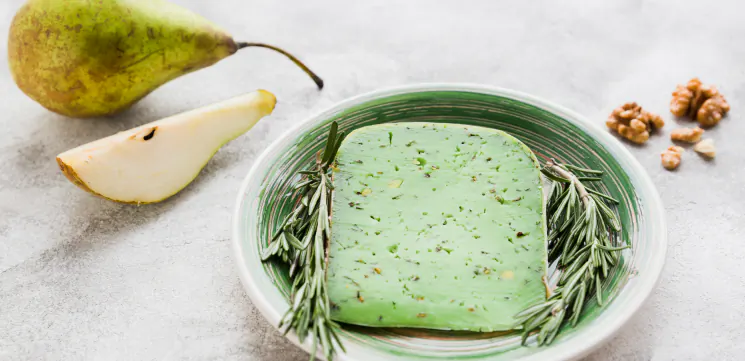
In recent years, cheese producers and consumers alike have shown considerable interest in the innovative use of herbs and edible flowers in cheesemaking. The use of such natural components as lavender, with its enchanting aroma, rosemary, which adds piquancy and depth of flavour to cheese, or even viola, which gives the product delicate floral notes, is becoming ever more common. These ingredients not only visually embellish the cheese, giving it a refined and elegant look, but also substantially enrich its aromatic profile, adding gentle, fresh aromas that captivate and at the same time surprise consumers.
Behind this trend is a desire to combine traditional cheesemaking methods with modern gastronomic innovation, creating cheeses that reflect the richness of natural flavours and aromas. Herbs and flowers not only add a unique flavour but also play a role in shaping texture and consistency, as they can influence the fermentation and ripening process. In addition, the use of edible flowers and herbs in cheesemaking inspires experiments with diverse gastronomic combinations, opening up new possibilities for creating unique cheese boards that will pleasantly surprise both gourmets and newcomers to the world of cheese.
This approach not only emphasises the aesthetic beauty and flavour depth of cheese but also reflects greater attention to healthy eating and the use of natural ingredients. As a result, cheeses with herbs and flowers are becoming a symbol of culinary mastery and an innovative approach to cheesemaking, making them not just part of a meal but a work of art.
Health and naturalness
Some spices, such as turmeric with its pronounced anti-inflammatory and antioxidant properties, cardamom, which aids digestion, and red pepper, which stimulates metabolism, turn every piece of cheese into a powerful dose of health-promoting substances.
In addition, the use of natural spices in cheese production underlines the focus on naturalness and producers' desire to move away from artificial additives and flavourings. This not only raises the value of the product in the eyes of consumers who prefer organic and environmentally friendly products but also opens up wider possibilities for experimenting with flavours, allowing the creation of unique and distinctive cheese delicacies.
The use of spices as natural preservatives also plays an important role in extending the shelf life of cheese, keeping it fresh and preserving its flavour qualities for longer. In this context, the natural antimicrobial properties of some spices, such as rosemary or garlic, can be used to provide additional protection of the product against harmful microorganisms.
Thus, the integration of spices and seasonings into cheese production reflects a deep fusion of culinary art with the principles of healthy eating, allowing producers not only to broaden their range of flavours but also to promote the overall well-being of consumers by providing them with high-quality products rich in beneficial substances.
Modern trends in cheese packaging emphasise the uniqueness of the product, showing the spices and seasonings included through transparent packaging elements or information inserts telling the story of the origin and properties of the spices.
Trends in the use of spices and seasonings in cheese production open up new horizons for gourmets and producers, offering countless opportunities for innovation and experimentation. From classic flavours to exotic and natural options, spices and seasonings not only improve the flavour and aroma of cheese but also make an important contribution to its nutritional value. At Prodservis, we strive to inspire you to create cheeses that meet current gastronomic trends while ensuring high quality and unsurpassed flavour. By choosing our certified food ingredients, you choose reliability, innovation and support in realising your culinary ambitions.
FAQ
Which spices are best suited for adding to cheese?
The choice of spices depends on the desired flavour and aroma. Popular options include turmeric for its anti-inflammatory properties, cardamom to aid digestion, and lavender to add floral notes.
Do spices affect the shelf life of cheese?
Yes, some spices have natural antimicrobial properties that can help extend the shelf life of cheese, maintaining its freshness and protecting it from microorganisms. However, to guarantee the best result, we recommend additionally using specialised protective cultures when making cheese.
Can spices change the texture of cheese?
Spices usually do not directly affect the texture of cheese, but they can influence the perception of its flavour and aroma. It is important to dose spices correctly so as not to overpower the natural flavour of the cheese.
How should spices be added to cheese?
Spices can be added at different stages of cheese production, depending on the desired effect. For even distribution of the aroma, spices can be mixed with milk or cheese mass before moulding the wheels, or added to the surface of the cheese during ripening.
Read also
- German technologist: what to produce tomorrow?
- Yoghurt production: from delicate texture to new product concepts with Prodservis
- European Insight: Tastes, Trends and New Products
- Marbled Beef Reimagined: Technology for Creating a Higher-Value Product
- Fertilisers for houseplants: how to choose and use them
