Potassium sorbate E202: safety, applications and effects
· Valerii Korolko · 8 min read
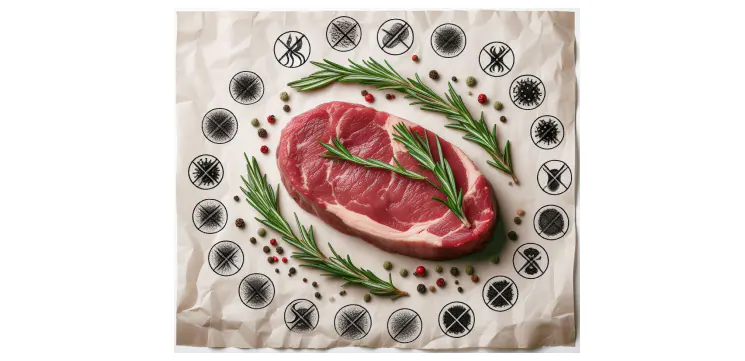
Potassium sorbate (E202) is the potassium salt of sorbic acid, known for its effectiveness in inhibiting the growth of moulds, yeasts and some bacteria. The compound is a white crystalline powder or granules that dissolve readily in water. It is odourless, with a slightly bitter taste when used in high concentrations.
Main properties
– Chemical formula: C₆H₇KO₂
– Molecular weight: 150.22 g/mol
– Readily soluble in water
– Stable under normal conditions, decomposes at high temperatures.
Applications of potassium sorbate
E 202 is an indispensable ingredient thanks to its broad-spectrum antimicrobial activity. It is especially valued in products where freshness and safety are paramount, as it prevents the formation of mould and the growth of mildew, preserves quality and extends shelf life, and prevents fermentation and spoilage.
- Meat products: sausages and frankfurters, ham, pâtés, semi-finished meat products (mince, cutlets)
- Dairy products: cheeses (especially grated and processed), yoghurts, sour cream and other dairy desserts
- Bakery products: bread and rolls, cakes and pastries, biscuits
- Canned products: canned vegetables and fruit, preserves and jams, compotes
- Beverages: fruit juices, carbonated drinks, wines
- Snacks: crisps, nuts and seeds, rusks
- Sauces and seasonings: mayonnaise, ketchup and other tomato sauces, mustard
- Semi-finished products and ready meals: pizza, instant noodles, ready-made salads and dishes
Mechanism of action of E202
The main function of the additive is to inhibit the growth and reproduction of microbes (moulds, yeasts and bacteria). Its mechanism of action consists primarily of the following:
– Disruption of cell membrane permeability: it alters the permeability of the cell membrane of microorganisms, leading to leakage of essential cell contents.
– Inhibition: it interferes with the functioning of microbial enzymes involved in energy production and the synthesis of important cell components.
– It is most effective in acidic conditions (pH 4.0–6.5), which makes it indispensable for preserving acidic products (fruit juices, salad dressings).
Safety of potassium sorbate for human health
– Acceptable daily intake is set at 25 mg per kg of body weight. This means that, within this limit, it is safe to consume daily throughout life without appreciable health risk.
– Allergic reactions: it has low allergenic potential, although some people may experience mild allergic reactions or skin irritation on direct contact.
– Metabolism and excretion: it is metabolised in the human body to water and carbon dioxide, which are eliminated naturally.
– Toxicity: it has no carcinogenic, mutagenic or teratogenic effects at the typical exposure levels used in preservation.
Regulation and standards for the use of E 202
In Ukraine, the use of E202 is regulated by a number of legislative acts and standards.
- State standards (DSTU)
– DSTU 7525:2014 "Food products. Consumer labelling. General requirements".
– DSTU 4518:2008 "Canned vegetables. General specifications".
- Technical regulations
– Technical Regulation on food additives – includes requirements for the use of food additives.
- Sanitary norms and rules (SanPiN)
– SanPiN 2.3.2.1078-01 "Hygienic requirements for the safety and nutritional value of food products".
– SanPiN 42-123-4240-86 "Sanitary rules for the use of food additives".
- European legislation
As Ukraine seeks to harmonise its legislation with European standards, the use of potassium sorbate is also regulated by:
– Regulation (EC) No 1333/2008 "On food additives".
Practical use and permitted levels
According to Ukrainian regulations, it may be used in certain quantities, depending on the type of product:
– In soft drinks, fruit juices and nectars – up to 200 mg/l.
– In dairy products (such as yoghurts and cheeses) – up to 300 mg/kg.
– In confectionery – up to 1000 mg/kg.
Labelling and quality control: the label must clearly state its presence – "potassium sorbate" or "E202".
Thus, the regulation and standards for the use of potassium sorbate in Ukraine are strictly controlled by state authorities in order to ensure the safety of food products for consumers. Despite its widespread use, it has become the subject of various public debates and misconceptions:
– Some consumers prefer natural preservatives to synthetic ones such as potassium sorbate, even though it is derived from natural sorbic acid.
– There is concern about the cumulative effect of consuming several synthetic additives, although studies consistently show that E202 is safe within the established daily intake.
– The term "chemical" often has a negative connotation, which leads to doubt or fear about additives, despite their safety and effectiveness.
The future of potassium sorbate and its alternatives
There are several alternatives to potassium sorbate for use as preservatives.
- Sodium benzoate (E211) – salts of benzoic acid. It fights yeasts, moulds and bacteria. It may affect the taste of products at high concentrations.
- Sodium nitrate and nitrite (E250, E251) – preservatives also used to retain colour in meat products (sausages, bacon, canned meat). They prevent the growth of bacteria that can cause botulism. High concentrations can be harmful to health, so their use is strictly controlled.
- Calcium propionate (E282) – a salt of propionic acid (bakery industry) against moulds and bacteria. It may cause gastrointestinal irritation in sensitive people.
- Ascorbic acid (E300) – vitamin C, used as an antioxidant in fruit juices, canned fruit and vegetables, and meat products. It is safe for health and adds nutritional value. It has limited preservative capacity compared with other preservatives.
- Citric acid (E330) – a natural preservative and acidity regulator (beverages, jams, confectionery). It is widely used and safe for health. It is not as effective as other preservatives against some types of bacteria.
- Essential oils – natural preservatives obtained from plants, used in meat products, sauces and cosmetic products; they can improve aroma and taste. The ingredient is expensive and has limited effectiveness at high concentrations.
- Natural antioxidants – tocopherols (E306, E307), rosemary extract, for fatty products, oils and meat products. They can improve nutritional value. Limited preservative capacity.
These alternatives are used depending on the type of product, the desired shelf life and safety requirements.
The food industry continues to explore new preservation technologies and natural alternatives to synthetic preservatives:
– Natural preservatives: There is growing interest in natural antimicrobial agents: essential oils, plant extracts and enzymes, which offer similar preservative effects with a "cleaner" label.
– Advanced processing technologies: Innovations in packaging (modified atmosphere) and preservation (high-pressure processing) reduce the need for chemical preservatives while maintaining safety and quality.
– Biopreservation: The addition of beneficial bacteria and their metabolites to suppress pathogenic organisms is a promising research direction for a biological approach to preservation.
Thus, potassium sorbate E202 is a relevant and effective preservative for the safety and longevity of products. Although it remains a mainstay in this field, ongoing research and consumer preferences are prompting a search for alternative preservation methods and ingredients. The technologists of Prodservis will help you make the right choice and protect yourself and your consumers from premature product spoilage, especially in summer. 30 years of experience on the market, a wide product range and high quality are the necessary factors for success in a highly competitive market.
FAQ
Why use food preservatives?
Food preservatives are used to extend the shelf life of products and to prevent their spoilage and the growth of microorganisms such as bacteria and fungi. They help to preserve the taste, texture and nutrients of products. Preservatives can also prevent the oxidation of fats and oils, which helps to avoid discolouration and unpleasant odours in products. As a result, the use of preservatives contributes to the safety and convenience of food storage.
Which preservatives are permitted for use in Ukraine?
Several types of food preservatives are permitted for use in Ukraine, included in national norms and standards.
1. **Potassium sorbate (E202)** - used to prevent the growth of yeasts and moulds.
2. **Sodium benzoate (E211)** - effective against bacteria and fungi, used in beverages and sauces.
3. **Sulphur dioxide (E220)** - used in dried fruit and wines to prevent darkening and preserve freshness.
4. **Sodium nitrite (E250)** - used in meat products to prevent the growth of bacteria and to preserve colour.
5. **Ascorbic acid (E300)** - an antioxidant, helps to prevent oxidation and preserve vitamins.
The use of preservatives must comply with the established norms and safety requirements so as not to exceed permissible levels or harm health.
Is it safe to use preservatives?
The health safety of preservatives depends on their type, quantity and compliance with established norms. In general, if preservatives are used at the recommended doses and in accordance with regulatory standards, they are considered safe.
Read also
- German technologist: what to produce tomorrow?
- Yoghurt production: from delicate texture to new product concepts with Prodservis
- European Insight: Tastes, Trends and New Products
- Marbled Beef Reimagined: Technology for Creating a Higher-Value Product
- Fertilisers for houseplants: how to choose and use them
