How long does plant-based milk keep?
· Maryna Petruk · 5 min read
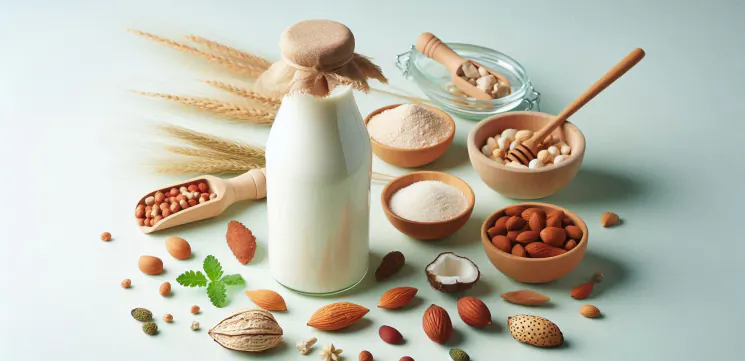
Factors affecting the shelf life of plant-based milk
The shelf life of plant-based milk depends on many interacting factors. Understanding them will help you store the product correctly and enjoy its fresh taste for as long as possible.
Type of plant raw material:
- Soy: Soy proteins are resistant to curdling, which prolongs shelf life.
- Oat: The carbohydrate and fat content affects how quickly it sours.
- Almond: A high fat content can lead to faster oxidation.
- Coconut: Coconut fats are more resistant to oxidation.
- Other nuts and seeds: Each type has its own characteristics that affect stability.
Processing method:
Pasteurisation: Destroys harmful microorganisms, but may affect taste and texture.
Ultra-pasteurisation: A higher processing temperature, which extends shelf life but reduces the content of some vitamins.
Homogenisation: Breaks fat globules into small particles, preventing them from separating.
Presence of additives:
- Sugar: Increases osmotic pressure and inhibits the growth of microorganisms.
- Salt: Increases acidity, which also hinders the development of bacteria.
- Stabilisers: Prevent separation and curdling.
- Emulsifiers: Keep the product uniform.
- Preservatives: Extend shelf life, but may have a negative effect on taste.
Packaging:
- Carton: Protects from light, lets air through.
- Plastic: Airtight, but reacts with the product.
- Glass: Ideal for storage at home.
How to extend the shelf life of plant-based milk
Refrigerator: The optimum storage temperature is +2 to +5 degrees Celsius, for no more than 5 days.
Closed container: After opening the pack, it is recommended to pour the milk into a glass jar with a tightly fitting lid. Do not use damaged packaging.
Protection from light: Ultraviolet rays accelerate the oxidation of the product, so keep it in a dark place.
Follow the storage conditions indicated on the packaging.
Signs of spoiled plant-based milk
- Smell: A sour, bitter or other unpleasant smell indicates that the product has spoiled.
- Taste: The appearance of a sour, metallic or other unusual aftertaste.
- Curdling: Formation of flakes or slime.
- Colour change: Darkening or the appearance of yellow/brown shades.
Shelf life after opening
According to Ukrainian legislation, every manufacturer must state the shelf life on the product packaging. On average, once opened, the milk keeps in the refrigerator for no more than 3-5 days.
Comparing the shelf life of different types of plant-based milk
Shelf life depends on the type and processing, and averages one year.
- Soy: Usually has a long shelf life, especially when pasteurised.
- Oat: A few days, but it may sour faster if it contains a lot of sugar.
- Almond: Has a relatively short shelf life, especially unsweetened varieties.
- Coconut: More stable and can keep longer than other types.
The effect of additives on the shelf life of plant-based milk
Stabilisers prevent separation and curdling. The most commonly used are carrageenan and gellan, guar and xanthan gums, which increase viscosity and create a creamy texture.
Emulsifiers promote an even distribution of fats in water; lecithin and mono- and diglycerides of fatty acids are used to improve foaming and emulsion stability.
Preservatives protect against the growth of bacteria, fungi and yeasts.
Sweeteners are used to improve taste: sugar, fructose, stevia and other artificial sweeteners. They can affect the growth of some types of bacteria.
Comparing the nutritional value of different types of plant-based milk
Nutritional value depends on the type of raw material, the processing method and the added ingredients.
- Protein: Soy milk contains the most protein; almond and rice milk contain less.
- Fats: Coconut milk has the most fat; rice milk has less.
- Carbohydrates: Rice milk has the most carbohydrates; almond milk has less.
- Vitamins and minerals: The vitamin and mineral content depends on the type of raw material and additional ingredients. For example, almond milk is rich in vitamin E and contains twice as much calcium as cow's milk, while soy milk is rich in iron.
Recommendations for choosing plant-based milk
- For general consumption: soy and oat.
- For weight loss: almond and rice.
- For people with nut allergies: rice, soy, coconut.
- For vegans: any type of plant-based milk, except cow's milk.
- For making porridge and smoothies: oat, rice.
- For baking: coconut.
Plant-based milk is a healthy and tasty product. By following the storage rules, you can keep it fresh for longer and get the most benefit from it. And at Prodservis we make every effort to supply your production with only high-quality, certified ingredients from well-known European manufacturers.
FAQ
Can plant-based milk be stored at room temperature after opening?
No, this is not recommended. Plant-based milk, especially once the pack has been opened, spoils very quickly at room temperature. Bacteria multiply actively in it, which changes its taste and smell and makes it unfit for consumption.
What is the shelf life of homemade plant-based milk?
The shelf life of homemade plant-based milk is much shorter than that of shop-bought milk. It depends on many factors, such as:
- Recipe: The composition of the milk (nuts, seeds, grains) and the method of preparation affect shelf life.
- Storage conditions: Temperature, humidity and the presence of air in the container accelerate or slow down spoilage.
Homemade plant-based milk usually keeps in the refrigerator for no more than 2-3 days.
How does the shelf life of plant-based milk differ from that of cow's milk?
- Plant-based milk is more prone to spoilage. This is because it lacks the natural preservatives found in cow's milk.
- The shelf life of plant-based milk is, as a rule, shorter.
What should I do if plant-based milk has changed its smell or taste?
If plant-based milk has changed its smell or taste, it must be thrown away. Consuming a spoiled product can cause food poisoning.
Tips for storing plant-based milk:
- Keep in the refrigerator: After opening the pack, always keep plant-based milk in the refrigerator.
- Use an airtight container: Pour the milk into a clean glass jar with a tightly closing lid.
- Do not leave it open: Try to close the pack as quickly as possible after each use.
- Pay attention to the production date: Do not buy products past their expiry date.
Remember: Freshly made plant-based milk is tastier and healthier, so try to make it in small batches.
Read also
- German technologist: what to produce tomorrow?
- Yoghurt production: from delicate texture to new product concepts with Prodservis
- European Insight: Tastes, Trends and New Products
- Marbled Beef Reimagined: Technology for Creating a Higher-Value Product
- Fertilisers for houseplants: how to choose and use them
