What is transglutaminase and how does it work?
· Valerii Korolko · 4 min read
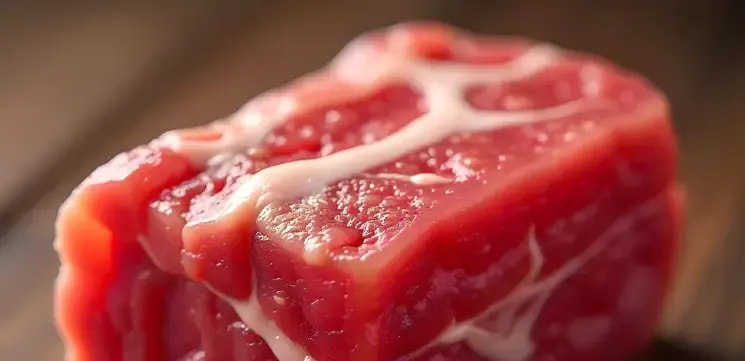
Transglutaminase is an enzyme used in the food industry to bond protein molecules together. It joins separate pieces of meat, fish, seafood and other protein products into a single whole.
Mechanism of action
Imagine that proteins are the bricks from which our food is built. Transglutaminase is a special glue that binds these bricks together very firmly. When it is used, protein molecules seem to "hook" onto one another, forming a strong, monolithic structure. It is like building a wall from bricks: the glue makes it stronger and more stable.
Types of transglutaminase
Microbial transglutaminase:
- Origin: Obtained from microorganisms such as bacteria.
- Properties: Most commonly used in the food industry thanks to its high activity and availability.
- Application: Used for bonding meat, producing fish sticks and creating textured plant proteins.
Tissue transglutaminase:
- Origin: Isolated from animal tissues.
- Properties: Has a higher specificity of action compared with microbial transglutaminase.
- Application: Used in scientific research, medicine and some highly specialised food products.
Plant transglutaminase:
- Origin: Obtained from plants.
- Properties: Less widespread than the microbial and tissue types.
- Application: Its potential for use in vegetarian and vegan products is being studied.
Where is transglutaminase used in the food industry?
The range of applications is extremely wide:
- Transglutaminase in the meat industry: Creating whole pieces of meat from small pieces, producing meat rolls, sausages and pâtés.
- Fish industry: Bonding fish fillets, producing fish sticks.
- Transglutaminase for the dairy industry:Improving the texture of cheeses, yoghurts and ice cream, and increasing product yield.
- Bakery industry: Improving dough quality and increasing bread volume.
Benefits of using transglutaminase
Thus, depending on the area of application, transglutaminase:
- Increases product yield by bonding small particles into a single monolithic structure.
- Improves texture and consistency,making products denser, juicier and more pleasant in texture.
- Helps minimise waste: Makes it possible to use small pieces of meat and fish.
- Makes it possible to create new products (for example, forming non-standard shapes).
Is transglutaminase safe for health?
Transglutaminase used in the food industry is safe for human health and is approved for use in many countries around the world, including Ukraine. It is non-toxic, does not cause allergic reactions and breaks down completely during cooking.
How to use transglutaminase in food products correctly
To achieve the best results, follow the manufacturer's instructions. Transglutaminase is usually added as a powder or a solution directly to the products. It is important to dose the enzyme accurately, as an excess may cause the product to harden excessively.
Where to buy transglutaminase in Ukraine?
Transglutaminase can be purchased in specialised shops or ordered from online shops that sell food additives and ingredients. Prodservis offers its customers the following:
PRODAMIX MR351 – A universal food "glue" for meat and fish. A functional blend for binding meat proteins into a monolithic whole-muscle structure, ensuring high stability and uniformity during further processing (boiling, frying, marinating, smoking, etc.). Composition: polyphosphates (E450, E452), animal proteins, enzymes. Dosage: 10-15 g per 1 kg.
PRODAMIX STABIL 2000 – A preparation used to improve the density, firmness and elasticity of meat products. Composition: maltodextrin, transglutaminase enzyme. Dosage as required by the technology.
PRODAMIX Stabil 140 – Meat glue. Firms up the consistency and improves the "bite" to a slight crunch. Helps reduce the amount of carrageenans, phosphates, gums and emulsifiers in recipes. It is also actively used in the dairy industry to bind proteins in whey and to increase the yield of tvorog (quark) by up to 25%. Composition: maltodextrin, transglutaminase. Activity: 140 units. Dosage: 0.03-0.1 kg per 100 kg.
30 years in the food ingredients market and our own staff of specialist technologists are a guarantee of high-quality ingredients and professional support for your business. Contact our managers for detailed information on ingredients that will help your products gain an advantage in the highly competitive food market.
Read also
- German technologist: what to produce tomorrow?
- Yoghurt production: from delicate texture to new product concepts with Prodservis
- European Insight: Tastes, Trends and New Products
- Marbled Beef Reimagined: Technology for Creating a Higher-Value Product
- Fertilisers for houseplants: how to choose and use them
