What are mineral fertilisers: general characteristics?
· Valerii Korolko · 7 min read
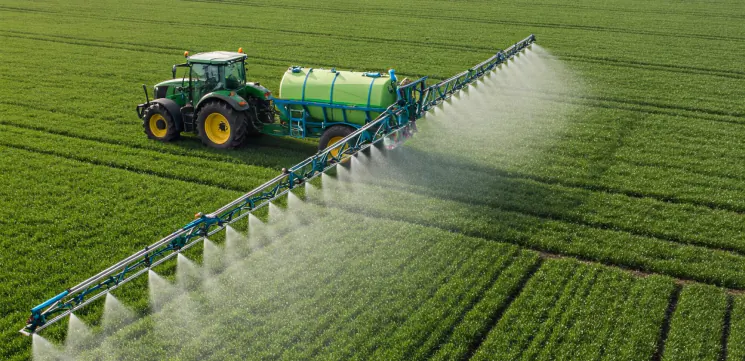
General characteristics of mineral fertilisers
What mineral fertilisers are there? By composition, depending on the main nutrients, we have nitrogen (N, for the growth of green mass), phosphorus (P, for the root system and flowering) and potassium (K, for immunity and resistance to disease and drought). In addition, they may also contain trace elements such as boron, copper, zinc, molybdenum and so on.
In dry form, fertilisers are easier to apply to the soil on large open areas, while liquid solutions are needed for foliar feeding or irrigation systems. If you are engaged in hydroponics, for example, or need drip irrigation, the highly soluble fertilisers from the Belgian company Prayon will be indispensable.
Types of mineral fertilisers and their features
🔹 By composition, mineral fertilisers are divided into:
- Single-component. Single-component mineral fertilisers include:
- Nitrogen: ammonium nitrate and urea (carbamide), ideal for leafy crops (lettuce, cabbage);
- Phosphorus: superphosphate and monoammonium phosphate, especially important for root vegetables (carrots, beetroot);
- Potassium: potassium chloride and potassium nitrate, suitable for fruiting crops (tomatoes, potatoes, apples).
- Complex (NP, NPK, PK). Complex mineral fertilisers are those that contain several elements at once.
🔹 By duration of action:
- Fast-acting – dissolve instantly, with a quick effect;
- Prolonged-release – release the elements gradually (for example, encapsulated fertilisers).
🔹 By form:
- Dry: convenient to apply by hand or with seed drills;
- Liquid: used in fertigation;
- Water-soluble: used in greenhouses and hydroponics.
How to apply mineral fertilisers correctly
When using mineral fertilisers, it is very important to follow the basic rules. Firstly, plants react very badly to an excess or shortage of fertiliser, so precise dosing is the key to a healthy harvest. The timing of application also plays a role, since some fertilisers are more useful at the start of the growing season, while others are indispensable during bud formation, and so on.
Depending on the goals, agronomists apply fertilisers at the root for main feeding, spray the leaves for quick absorption, and work them into the soil before sowing for general improvement.
Inexperienced farmers often make a number of mistakes, such as starting to apply fertilisers without prior soil analysis. The result is "blind" spending, which harms not only your budget but also your harvest: overdosing with micro- and macroelements, an unsuitable fertiliser at the wrong stage of development, and so on. Acidic soils, for example, can fix phosphorus, while nitrates are washed out faster on sandy soils.
In general, we recommend using nitrogen and complex fertilisers in spring, and preparing the soil for winter in autumn with phosphorus-potassium fertilisers.
How to apply mineral fertilisers correctly
When using mineral fertilisers, it is very important to follow the basic rules. Firstly, plants react very badly to an excess or shortage of fertiliser, so precise dosing is the key to a healthy harvest. The timing of application also plays a role, since some fertilisers are more useful at the start of the growing season, while others are indispensable during bud formation, and so on.
Depending on the goals, agronomists apply fertilisers at the root for main feeding, spray the leaves for quick absorption, and work them into the soil before sowing for general improvement.
Inexperienced farmers often make a number of mistakes, such as starting to apply fertilisers without prior soil analysis. The result is "blind" spending, which harms not only your budget but also your harvest: overdosing with micro- and macroelements, an unsuitable fertiliser at the wrong stage of development, and so on. Acidic soils, for example, can fix phosphorus, while nitrates are washed out faster on sandy soils.
In general, we recommend using nitrogen and complex fertilisers in spring, and preparing the soil for winter in autumn with phosphorus-potassium fertilisers.
Mineral fertilisers: positive and negative effects of use
Before using any kind of feeding, it makes sense to ask yourself a number of questions. In particular, and in our opinion one of the most important: what will this give our harvest? A fertiliser applied correctly and on time will help to increase yield, control the content of nutrients and achieve a quick result.
Unregulated or uncontrolled use of fertilisers can cause, for example, the accumulation of nitrates (with excessive use of nitrogen), soil depletion (with long-term use of fertilisers) and a "habituation" effect. From an environmental point of view, there may be contamination of wastewater with excess elements, a reduction in the microbiological activity of the soil, and so on.
So we stress once again: only fertiliser that is applied correctly and on time will become a true friend to your harvest.
How to choose mineral fertilisers for a specific crop
Different plants have their own unique nutrient requirements. A mistake at this stage, and instead of a good harvest you get disappointment.
🌾 Cereal crops (wheat, barley, maize, oats)
🔸 Main requirements: nitrogen (N) for the growth of stems and leaves; phosphorus (P) for the root system and ear formation; potassium (K) for resistance to disease and drought.
🔍 When applying fertilisers, be sure to take soil acidity into account: phosphorus is poorly absorbed on acidic soils without liming. The main application takes place in autumn or before sowing in spring, and top dressing is added 2-3 times during the growing season.
🥕 Vegetable crops (tomato, cucumber, cabbage, carrot, pepper)
🔸 Different types of crops need different amounts of fertiliser. For example, fruiting crops (such as tomato, pepper and aubergine) are the main consumers of potassium and phosphorus; root vegetables (carrot, beetroot) like potassium, magnesium and boron most of all; leafy crops (lettuce, cabbage) cannot do without nitrogen at the start.
Also note that, to avoid blossom end rot, tomatoes need more calcium; cucumbers are sensitive to excess nitrogen, so more potassium is better; carrots develop better with boron.
🍏 Fruit trees and berry crops (apple, pear, grape, blackcurrant, raspberry)
Fruit trees do not tolerate excess nitrogen, but they need phosphorus and potassium for the formation of flower buds. In turn, magnesium, calcium and boron are critically important for the fruit. During the period of active growth, foliar feeding is much more effective than applying nutrients to the soil. In autumn: no nitrogen!
🔍 For berry crops:
- Blackcurrant and raspberry respond well to potassium and magnesium;
- Grapes need zinc and boron, especially during the berry-filling phase.
Soil analysis is a basic requirement before application!
An alternative to mineral fertilisers: is it worth switching to organic
The question of whether it is appropriate to use alternatives to mineral fertilisers still causes controversy in society.
🌿 Organic fertilisers: what they are and how they work
Organic matter is everything of natural origin that, as it decomposes, enriches the soil with humus, trace elements and microflora: manure, compost, green manures, vermicompost.
They help restore soil structure, improve water retention, increase humus content and promote the development of beneficial microbiota in the soil. They are also safe for the environment and do not accumulate in the fruit.
⚖️ Mineral fertilisers vs organic matter: a comparison
| Criterion | Mineral fertilisers | Organic fertilisers |
|---|---|---|
| Speed of action | Very fast | Slow, gradual |
| Dosage control | Precise, calculated | Depends on composition and maturity |
| Nutrient content | Concentrated | Dilute, but with humus |
| Effect on soil | Can deplete it if overapplied | Improves structure and fertility |
| Long-term effect | Short-lived | Long-lasting |
| Environmental friendliness | Possibility of pollution | Entirely natural |
| Price | Affordable, but depends on the market | Can be made yourself |
Analysing the table, we see that mineral fertilisers serve as "first aid" for the plant, while organic matter works for the long term.
So, if you are an entrepreneur who:
- Is engaged in intensive farming or runs an agribusiness and needs high yields year after year, with contracts that have strict product quality requirements → organic matter will not be able to cover the needs in time.
- Uses greenhouse cultivation / hydroponics, where every process and component is strictly controlled (drip irrigation, fertigation, a mineral salt solution), there will simply be nowhere for you to apply organic matter.
- Owns depleted or poor soil, then organic matter will give little result without the addition of macronutrients.
Therefore, where possible, we advise using a combined approach (an organo-mineral system). This is the most effective option, which gives a harvest now and does not kill the soil in the future.
How to apply mineral fertilisers and organic matter correctly:
- In autumn, apply humus or compost before the main tillage;
- In spring, apply a mineral fertiliser with nitrogen to start the growing season;
- In summer, apply foliar feeding with trace elements or a liquid fertiliser;
- After harvest, sow green manures, which will loosen the soil and accumulate nitrogen.
In this way, you will not only be able to reduce the dose of mineral fertilisers without losing yield and lower the risk of nitrate accumulation, but also maintain the microbiological activity of the soil.
If you need additional advice about our products, the managers of Prodservis will be happy to give you comprehensive information! Get in touch!
Read also
- German technologist: what to produce tomorrow?
- Yoghurt production: from delicate texture to new product concepts with Prodservis
- European Insight: Tastes, Trends and New Products
- Marbled Beef Reimagined: Technology for Creating a Higher-Value Product
- Fertilisers for houseplants: how to choose and use them
