Secrets of using professional spices in sausage production
· Valerii Korolko · 6 min read
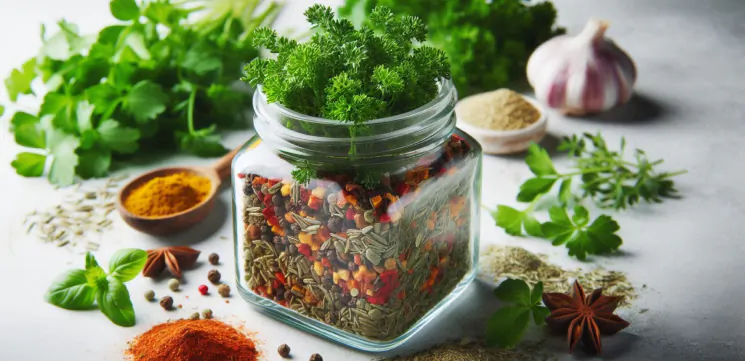
Why are spices essential in sausage production?
- Improving flavour: the primary purpose is to create an excellent flavour profile that defines different types of sausages.
- Aroma stimulates the appetite and shapes expectations of the taste.
- Preservation: some spices have natural antimicrobial properties and help preserve the sausage by inhibiting the growth of bacteria, moulds and yeasts, extending shelf life.
- To improve colour.
- In combination with other ingredients, they influence the texture of the sausage.
- To reflect cultural or regional identity.
- Masking undesirable flavours in the meat or arising during production.
- They interact during fermentation, contributing to the development of complex and deep flavours.
- Health benefits: including turmeric and ginger can increase the value of the product, appealing to health-conscious consumers.
- Using professional spice blends ensures consistent flavour and quality across different batches, which is vital for maintaining brand reputation and consumer trust.
The main types of professional spices for sausage production
The most common components of professional spices are:
– Salt for flavour, preservation and protein extraction.
– Pepper (black, white, red) adds heat and depth.
– Garlic is part of many sausages and adds a strong, pungent flavour.
– Paprika provides mild sweetness and a bright colour.
– Nutmeg gives warmth and a barely perceptible sweetness.
– Coriander is citrusy and nutty, popular in German sausages.
– Caraway has a warm, earthy flavour.
– Mustard seed is sharp and piquant, characteristic of Eastern European products.
– Thyme is subtle and earthy.
– Oregano is bright and slightly bitter, characteristic of Italian sausages.
– Marjoram is mild, sweet and citrusy.
To reproduce the unique flavour profile of certain types of sausage products, special blends are also used, based on:
– Fennel seeds, a key component of Italian sausages for their sweet aniseed flavour.
– Cloves and allspice, which give warm, sweet and spicy notes.
How to choose the right spices for sausage
Determine the style and the cultural and regional characteristics. Different sausages have distinct traditional flavour profiles. Pay attention to the cultural and regional origin, as popularity in one region does not guarantee recognition in another.
Defining the desired flavour profile.
– Aromas: bright and dominant, or subtle and complementary.
– Balance: spicy sausages "benefit" from the sweetness of paprika or the earthiness of caraway.
– Layering: combine base, secondary and accent spices (chilli flakes, fennel seeds) to create depth and complexity.
Quality of spices.
– Always choose fresh, high-quality ingredients to avoid dulled aroma and a deterioration of the overall organoleptic characteristics.
– Buy spices from proven suppliers, who guarantee their purity and quality. Some additives are particularly often adulterated, so the choice of supplier is crucial.
– Consider whether to use whole, crushed or ground spices. Whole spices retain their aroma longer and can be brought to the required size. Ground spices are convenient and mix easily, but lose their potency over time.
Ready-made blends versus individual spices.
– Convenience: ready-made blends are convenient for large-scale production, ensuring uniformity and saving time.
– Mixing individual spices allows customisation (for a unique flavour profile).
Consider functional ingredients.
– Preservation: garlic and black pepper have antimicrobial properties.
– Colour: paprika and turmeric, to add or improve colour.
– Spice blends contain functional ingredients to improve texture.
Consumer preferences and market trends.
– Always take into account the preferences of your target audience. Some may prefer milder flavours, while others enjoy more intense ones.
– Consumers are increasingly looking for products with natural and organic spices.
– Keep up to date with flavour trends in the food industry: global and exotic flavours are growing in popularity.
Trials and iterations
Before starting large-scale production, test small batches with different spice combinations to find the perfect balance and evaluate the aroma, taste and aftertaste. Involve a group of tasters to obtain varied feedback and adjust the blend based on it (changing the quantities or adding/removing individual items).
Regulatory considerations
– Make sure that all ingredients used comply with local food safety regulations and labelling requirements.
– Spices that may be allergens require special labelling.
Sourcing and supply chain.
– Choose suppliers who provide consistent quality and supply of spices to avoid variations in production.
– Although quality should not be compromised, take cost-effectiveness into account.
By carefully weighing these factors, you will be able to select the ideal combination that will not only improve flavour and quality, but also meet your production goals and market requirements.
Technologies for incorporating spices in meat processing
- Distribute the spices evenly throughout the meat mixture by thoroughly mixing the ingredients (using industrial mixers).
- Use crushed spices to obtain a smoother texture. Sieving will help remove any large particles.
- Spices are often premixed with salt. It acts as a carrier and helps extract proteins for better binding.
- During mixing, the meat mixture should be kept cool to prevent the fats from melting and affecting the texture and aroma.
- The seasoned meat mixture needs to rest to allow the aromas to blend and develop.
Advantages of using professional spices
- Consistency: professional blends ensure stable flavour profiles, which is crucial for maintaining product quality.
- Efficiency: they save time and reduce the complexity of measuring individual ingredients, ensuring fast and efficient production.
- Customisation: the ability to create individual blends tailored to specific recipes and regional tastes, enhancing the uniqueness of the product.
- Quality control: spice suppliers often apply strict quality control measures, guaranteeing that their product is fresh, pure and free of foreign impurities.
The company Prodservishas been operating on the Ukrainian market since 1997. During this time, we have established ourselves as a reliable supplier of high-quality food ingredients for meat processing enterprises. Our entire range has undergone multi-level verification and holds all the necessary quality certificates. Our in-house team of specialist technologists will always help you improve the quality of your products, expand your range or solve other production tasks.
FAQ
Which spices are best suited for sausage production?
The best spices depend on the type of sausage you are making. Blends based on black pepper, garlic, fennel, paprika and coriander are used most often. Special blends are available for specific sausages.
How should spices be added to minced meat?
They should be evenly mixed with the meat for a uniform flavour. This can be achieved by first mixing the spices with salt, and then with the meat mixture in a chilled environment to preserve the texture.
Does the production process affect the flavour of spices?
Yes, the production process can affect flavour. The temperature during mixing, the curing time and the cooking methods (smoking, drying or boiling) can influence how the spices release their aromas in the final product.
Read also
- German technologist: what to produce tomorrow?
- Yoghurt production: from delicate texture to new product concepts with Prodservis
- European Insight: Tastes, Trends and New Products
- Marbled Beef Reimagined: Technology for Creating a Higher-Value Product
- Fertilisers for houseplants: how to choose and use them
