Plant-based meat alternatives: how vegan burgers, schnitzels and sausages are made
· Olena Lobach · 8 min read
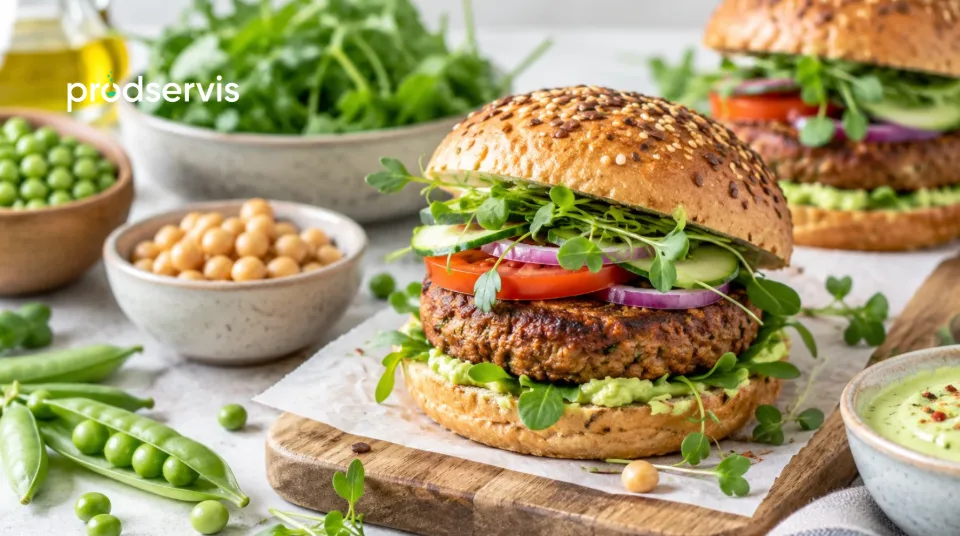
The market for plant-based alternatives is growing thanks to a combination of food technologies, new types of raw materials and changes in consumer habits. Alongside vegans and vegetarians, these products are chosen by flexitarians, who consciously reduce their meat consumption without giving it up entirely.
A juicy burger with a golden-brown crust, a spicy grilled sausage, a crispy schnitzel with a tender filling or golden fish croquettes. All of these products can be made without meat or fish, using plant proteins and specialised functional ingredients.
For food producers, plant-based alternatives open up opportunities to expand the range: from burger patties and sausages to ready-made breaded products and semi-finished products for HoReCa.
However, creating a high-quality plant-based product requires an understanding of the properties of protein raw materials, structure-forming processes and the interaction of functional ingredients.
Plant protein: how to recreate the structure of meat
Meat has a complex fibrous structure that determines its density, springiness and chewing character. In plant-based alternatives, similar properties are created with the help of protein texturates.
The most common sources of raw material are soy, peas and wheat. Each of these proteins has its own technological characteristics, which affect consistency, water-holding capacity and behaviour during heating.
Texturates of different shapes, sizes and densities are used in the production of plant-based alternatives.
Pea texturate makes it possible to create plant-based products with a characteristic structure. It can be used as a protein base for cutlets, balls and other formed products.
Among the specialised solutions, Prodservis offers PRALLO® Pea Tex New, a pea texturate used in technologies for producing plant-based meat alternatives.
For products that need a more pronounced fibrous structure, producers can use Soy texturate Chunks Prallo and Soy-Wheat texturate Struktur.
Such ingredients broaden the possibilities for developing plant-based schnitzels, escalopes, chunk-style semi-finished products and other products in which density and chewing character are important.
Rice texturate Prallo complements the range of protein bases, allowing technologists to consider alternative ingredient solutions according to the requirements of a specific recipe.
The choice of texturate affects the final result: from the soft structure of a plant-based cutlet to a dense product with pronounced fibres.
Plant-based burger: juiciness, structure and the flavour of frying
The burger remains one of the most recognisable formats of plant-based meat alternatives.
Consumers expect familiar characteristics from it: a juicy centre, an appetising crust, a rich flavour and a pleasant texture.
Achieving such a result with a protein texturate alone is difficult. Plant proteins have different water- and fat-binding properties compared with muscle proteins of animal origin.
Therefore, when developing a burger patty, it is necessary to coordinate the protein base, the fat phase, the structure-forming components and the flavour composition.
For this product category, the Prodservis range includes the specialised solutions Burger Patty P Prallo and Burger Spice Combi Vegan.
They can be considered as part of the comprehensive development of plant-based burgers, where the separate technological tasks are forming the structure of the patty and creating a characteristic flavour profile.
A properly selected ingredient system helps to match the properties of plant raw materials with the requirements for the finished product.
For industrial production, it is also important to check the behaviour of the patties during forming, freezing, storage and frying.
Plant-based sausages and hot dogs: a familiar format with a new composition
Plant-based sausages and hot dogs allow producers to work with popular fast-food formats.
The finished product must keep its shape, show appropriate springiness and remain pleasant in consistency after heating.
Unlike traditional meat sausages, plant-based recipes contain no myofibrillar proteins, which provide the characteristic binding of the components of meat mince.
Therefore, forming the structure requires the use of appropriate protein and functional systems.
For developing plant-based hot dogs, Prodservis offers Hot Dog Combi Vegan, a specialised solution for this product category.
Combined with a suitably selected plant base, such systems can be used to create products for the grill, hot snacks and ready meals.
Technologists pay particular attention to the stability of the product during heating, the compatibility of the recipe components and the reproducibility of results from batch to batch.
Vegan meatballs: new opportunities for ready meals
Plant-based meatballs can become the basis of a wide range: from alternatives to traditional meatballs to spicy snacks, dishes with sauces and frozen semi-finished products.
For this category, the homogeneity of the mass, its ability to be formed, retention of a round shape and appropriate texture after cooking are important.
The Prodservis product portfolio includes the blend Veggie Balls, designed for developing plant-based products in a ball format.
This direction allows producers to experiment with flavour concepts: vegetable, spicy, herb-based or with distinctive roasted aromas.
Depending on the recipe, the finished products can be used as a stand-alone product, a component of ready meals or a semi-finished product for professional kitchens.
Crispy plant-based schnitzel: egg-free breading technology
A golden crust, a characteristic crunch and a juicy centre make breaded products attractive to consumers.
In plant-based schnitzels, the technological task covers two systems: forming the base of the product and creating a stable breading layer.
For making the plant-based base, Prodservis offers Schnitzel Combi Vegan. In the relevant technological solutions, soy and soy-wheat texturates can be used to form the structure.
The next stage is creating the breading coating.
In traditional recipes, egg is often used to make the breadcrumbs adhere to the surface of the product. In vegan production, this function can be performed by specialised systems.
Batter NP 50 is used as an alternative to the egg component in breading technology. It helps ensure that the outer layer adheres to the base of the product.
To create a distinctive crispy crust, Knuspergold breading mix, a coarse-grained spicy breading mix, can be used.
The combination of a suitable batter and breading makes it possible to develop plant-based schnitzels, nuggets, balls and other breaded products with an attractive appearance.
During industrial production, it is necessary to monitor the evenness of the coating, its retention during processing and the behaviour of the finished product after freezing and reheating.
Plant-based alternatives to fish products: from croquettes to new snacks
Plant-based fish alternatives open up another direction for producers of semi-finished products and ready meals. Particular attention is drawn to breaded formats, where the combination of structure, flavour and a crispy crust shapes the overall perception of the product.
Fish croquettes traditionally have a tender inner consistency and golden breading. In the plant-based version, these characteristics are created thanks to specially selected protein and functional ingredients.
For developing this category, Prodservis offers Fish Croquette Combi Vegan. This solution can be considered when creating plant-based croquettes and corresponding product concepts without the use of fish raw materials.
The use of a specialised batter and breading makes it possible to work further on the appearance and texture of the finished product.
Nutritional value of plant-based alternatives: more attention to composition
The plant origin of a product does not in itself determine its nutritional value. When developing a recipe, producers should take into account the content and quality of protein, the amino acid composition, and the amounts of salt, saturated fats and dietary fibre.
Pea, soy, wheat and other plant proteins differ in their nutritional characteristics. Their combination can be used to form the required protein profile of the product.
Labelling requires particular attention. The use of plant-based ingredients does not guarantee the absence of all allergens, and claims about nutritional properties must correspond to the actual composition and legal requirements.
For producers working with vegan products, it is also important to verify the origin of all recipe components, including flavourings, processing aids and auxiliary ingredients.
From ingredient to finished product: Prodservis technological solutions
Developing plant-based alternatives requires comprehensive work on the recipe.
Protein texturates form the basis of the product. Functional blends help create the required technological characteristics. Flavour components define the aroma profile, while batters and breading provide the appropriate properties of the outer coating.
The Prodservis range includes ingredients for various areas of plant-based production: from PRALLO® pea, rice and soy texturates to specialised blends for burgers, hot dogs, schnitzels, vegetable balls and alternatives to fish products.
This allows producers to select ingredient solutions for specific product concepts and technological processes.
Prodservis specialists help to assess the characteristics of the raw materials, define the requirements for the finished product and select the appropriate recipe components.
Planning to expand your range with plant-based alternatives to meat or fish?
Contact the Prodservis technologists. We will help you select ingredients for developing a new product or improving an existing recipe.
For manufacturers: Alternative meat
Products from the article
- Soy Wheat Texturat
- Soy Texture Slices Prallo
- Soy-Wheat Texture Supro MAX 5050 IP
- Rice Texturate Prodamix
- STRUKTUR Prodamix
- Sunflower texture
- Burger Patty P Prodamix
- Burger Spice Combi Vegan Prodamix
Read also
- The Future of the Meat Business: An Expert View from Ivan Sierov, Development Director at Prodservis
- Heat-stable cheese for production: from cheese sausages to grilling products
- Prodservis at Agro2Food 2026: ingredients, technologies and solutions for food production
- Prodservis at the "Meat Business 2026" conference
- Pelmeni, vareniki, khinkali, pancakes: three components of a quality semi-finished product
