The Role of Stabilisers in Dairy Production: Yoghurt and Ice Cream
· Maryna Petruk · 8 min read
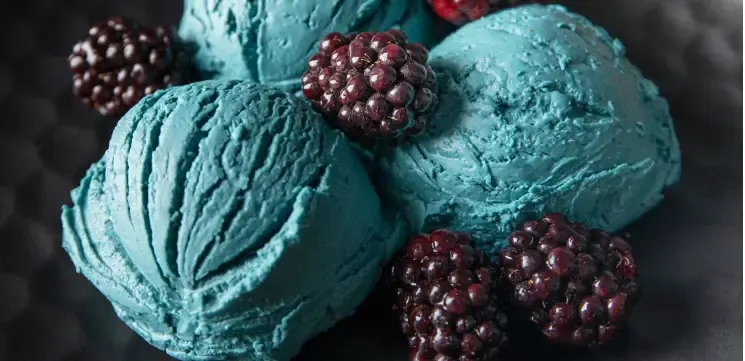
The role of stabilisers in the dairy industry
Milk is a complex colloidal solution in which fat globules are dispersed in the aqueous phase. This system is rather unstable and prone to various changes during technological processes and storage.
Why are stabilisers important in the production of dairy products?
- They preserve the structure of the product: They prevent syneresis (separation of whey) and layering. In ice cream they improve the texture, stabilise it, prevent the formation of ice crystals and increase viscosity.
- They improve texture: They give the product the desired consistency, viscosity and elasticity.
- They improve taste qualities
- They broaden the range: They make it possible to create new types of dairy products with non-standard characteristics.
The main types of stabilisers
- Hydrocolloids: of plant origin (guar gum, xanthan gum, carrageenan, pectins, starches), animal origin (gelatine, casein) and microbial origin (xanthan gum, gellan gum).
- Emulsifiers: lecithin, mono- and diglycerides of fatty acids.
- Yoghurts: adding thickness and uniformity.
- Processed cheeses: creating various textures and consistencies.
- Ice cream: preventing the formation of ice crystals and regulating the melting process and the consistency of the finished product.
- Desserts: giving a delicate texture and a pleasant taste.
Yoghurt stabiliser: ensuring the ideal consistency
The use of stabilisers in yoghurt productionis a science in its own right, requiring a deep understanding of both the chemical processes and the technological features of production.
How do stabilisers affect the texture of yoghurt?
- Formation of a three-dimensional network: Stabiliser molecules form a complex network that holds water and the other components of the yoghurt.
- Interaction with milk proteins: Stabilisers bind to milk proteins, changing their structure and increasing the viscosity of the product.
Popular yoghurt stabilisers: carrageenan and other additives
- Carrageenans: Natural polysaccharides from red seaweed. They give yoghurt viscosity and elasticity and improve its texture.
- Modified starches: These are natural starches that have undergone special processing that changes their properties at the molecular level. Through physical, chemical and biochemical processes, the starch acquires new characteristics required for various industries. They add thickness and resistance to temperature changes.
- Guar gum: A polysaccharide from guar beans. It gives yoghurt viscosity and improves its texture.
- Gelatine: A protein of animal origin, used to create dense and firm yoghurts.
- Pectins: Natural polysaccharides found in fruit. They add viscosity and gel-forming properties to yoghurt.
Prodservis offers its regular customers food stabilisers from the well-known Swiss company Ingrema AG for use in production:
- PRODAMUL JD-102 – a composition of modified starch (E-1422) and pectin (E-440); it gives the product a viscous consistency, withstands high pasteurisation temperatures, gives a creamy and full taste, and prevents syneresis.
- PRODAMUL JD-108 – a composition of gelatine and milk proteins. It withstands high pasteurisation temperatures, forms a structure after the product is cooled to 4-6°C, prevents syneresis and contributes to long storage of the product.
- INGRESAN D-83/P UA – a mixture of modified starch (E-1422), gelatine and guar gum (E-412). It gives the product viscosity, consistency and a creamy taste, prevents syneresis and replenishes dry matter. It withstands high pasteurisation temperatures.
The use of stabilisers in ice cream production
Ice cream stabiliser – is an integral part of the technological process that provides a creamy texture, prevents the formation of ice crystals and improves the overall quality of the product:
- They create a viscous structure that holds water and the other components of the ice cream, preventing the formation of large ice crystals.
- They slow the melting of the ice cream, preserving its shape and texture for longer.
- They enhance the flavour of the ice cream, giving it a richer and creamier taste.
- Some stabilisers make it possible to increase the volume of the ice cream without increasing the amount of dairy base.
Ice cream stabiliser: stabilisation at low temperatures
When ice cream is frozen, the water in the mixture turns into ice. Large ice crystals make ice cream hard and coarse in taste. Stabilisers work by forming a gel-like structure in the mixture. This structure:
- Slows the growth of ice crystals
- Increases the viscosity of the mixture
- Protects proteins
How do stabilisers ensure a creamy texture in ice cream?
Thanks to stabilisers, smaller ice crystals form, which makes ice cream smoother and creamier.
Stabilisers help to preserve air bubbles, which give ice cream volume and lightness.
The creamy texture lasts longer because stabilisers slow down the melting of ice cream.
Carrageenan as a universal stabiliser for dairy products
Carrageenan is a natural polysaccharide extracted from red seaweed. Thanks to its unique properties, it is widely used in the food industry, particularly in the dairy sector, as an effective stabiliser.
Properties of carrageenan in dairy products
- Kappa carrageenan: Forms strong gels that are well suited to products requiring a clear structure, for example milk puddings and jellies.
- Iota carrageenan: Creates elastic gels that are not subject to syneresis (the release of liquid). It is used in ice cream and yoghurts to give them a smooth texture and prevent the formation of ice crystals.
- Lambda carrageenan: Does not form gels on its own, but interacts with milk proteins, increasing the viscosity of products. It is used in milkshakes and chocolate milk drinks to add thickness and uniformity.
General properties of carrageenan in dairy products:
- Stabilisation: Prevents products from separating, whey formation and particle sedimentation.
- Thickening: Gives products the required viscosity and thickness.
- Texture formation: Helps to create the desired texture, from smooth and creamy to dense and jelly-like.
- Increased volume: Increases the volume of the product and makes it possible to reduce the cost of other ingredients.
Why does carrageenan remain a popular stabiliser in the dairy industry?
- Naturalness: Carrageenan is a natural substance obtained from seaweed, which meets current trends towards naturalness and health.
- Safety: Approved for use in many countries around the world, including Ukraine.
- Multifunctionality: Can perform several functions at once: stabilise, thicken and form texture.
- Compatibility with other ingredients: Combines well with other additives used in the dairy industry.
- Resistance to high temperatures: Is not broken down during pasteurisation and sterilisation.
Technological process for using carrageenan
- Dissolving in water at high temperature.
- Adding to the product: it is added to the milk mixture at a certain stage of production.
- Cooling: the mixture thickens, forming a gel or a viscous solution.
Carrageenan is an indispensable tool for dairy producers, allowing them to create products with the desired texture, stability and long shelf life. Understanding the properties of carrageenan and the specifics of its application makes it possible to optimise technological processes and create high-quality dairy products. For its part, Prodservis offers not only quality ingredientsfrom well-known European manufacturers, but also helps businesses create a unique product for a highly competitive market.
FAQ
What is the role of stabilisers in the production of dairy products?
- They preserve the structure of the product: They prevent syneresis (separation of whey) and separation of layers. In ice cream they improve texture, stabilise, prevent the formation of ice crystals and increase viscosity.
- They improve texture: They give the product the desired consistency, viscosity and elasticity.
- They improve taste
- They expand the range: They make it possible to create new types of dairy products with non-standard characteristics.
Why is carrageenan often used as a stabiliser in the dairy industry?
- Naturalness: Carrageenan is a natural substance obtained from seaweed, which meets current trends towards naturalness and health.
- Safety: Approved for use in many countries around the world, including Ukraine.
- Multifunctionality: Can perform several functions at once: stabilise, thicken and form texture.
- Compatibility with other ingredients: Combines well with other additives used in the dairy industry.
- Resistance to high temperatures: Is not broken down during pasteurisation and sterilisation.
Which stabilisers are used for yoghurt?
Prodservis offers its regular customers the use in production of food stabilisers from the well-known Swiss company Ingrema AG:
- PRODAMUL JD-102 - a composition of modified starch (E-1422) and pectin (E-440), gives the product a viscous consistency, withstands the high temperature of pasteurisation, gives a creamy flavour and fullness of taste, and prevents syneresis.
- PRODAMUL JD-108 - a composition of gelatine and milk proteins. Withstands high pasteurisation temperatures, creates structure after the product is cooled to 4-6°C, prevents syneresis and contributes to long storage of the product.
- INGRESAN D-83/P UA - a mixture of modified starch (E-1422), gelatine and guar gum (E-412). Gives the product viscosity and consistency, gives a creamy flavour, prevents syneresis and replenishes dry matter. Withstands high pasteurisation temperatures.
How do stabilisers affect the consistency of ice cream?
When ice cream is frozen, the water in the mixture turns into ice. Large ice crystals make ice cream hard and coarse in taste. Stabilisers work by forming a gel-like structure in the mixture. This structure:
- Slows the growth of ice crystals
- Increases the viscosity of the mixture
- Protects proteins
Read also
- German technologist: what to produce tomorrow?
- Yoghurt production: from delicate texture to new product concepts with Prodservis
- European Insight: Tastes, Trends and New Products
- Marbled Beef Reimagined: Technology for Creating a Higher-Value Product
- Fertilisers for houseplants: how to choose and use them
