What to Feed Cucumbers: Effective Fertilisers for Growth and Yield
· Valerii Korolko · 5 min read
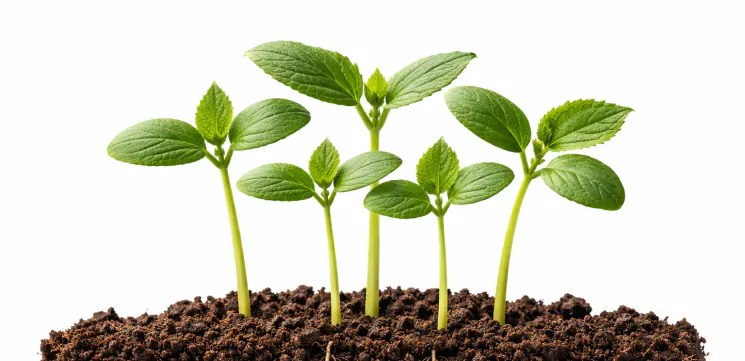
Cucumbers are real "gluttons" among vegetable crops. They grow very fast, and for the fruits to be juicy and crisp, and for there to be plenty of them, the plant needs good nutrition. Simply watering is not enough here. First, the plants need gentle support after planting. Then nutrition is important during flowering. And during fruiting, cucumbers especially need steady watering and enough potassium. This is the answer to the question of which cucumber feeding your bed needs.
Why cucumbers need regular feeding
You know the saying: bread is the head of everything. Well, it is the same story with cucumbers! If you want a perfect harvest, pay attention to the soil! Cucumbers have a shallow root system. It cannot reach nutrients in the deep layers of the soil. At the same time, the bush constantly grows leaves and forms fruits. If the soil is not fertilised, it quickly becomes depleted. As a result, cucumbers grow slowly, turn yellow or taste bitter. Feeding cucumbers for a good harvest is the guarantee that you will be gathering them by the bucketful until autumn.
It is important to keep the soil acidity within pH 6.0–6.8: this is the optimal range at which fertilisers work ideally. The soil should be fertilised on a regular basis, and there should be no imbalance in nutrition, as this can lead to wonderful, handsome bushes but absolutely meagre fruits. So balanced, step-by-step soil nutrition is the answer to the question of what is best to feed cucumbers with or what is best to use to feed cucumbers.
What to feed cucumbers after planting and at different growth stages
A plant's diet, like a person's, needs to change depending on its "age". What is good for a young shoot is not always needed by a mature bush. So let us follow the scheme of how to feed cucumbers, and off we go!
Feeding cucumbers after planting in the soil
If you are wondering what to feed cucumbers for growth after planting, do not chase a large dose. The plant needs time to take root. Feed cucumbers for the first time approximately 2 weeks after planting the seedlings. At this time the plant needs nitrogen. It helps build up a powerful green mass. If you are thinking about what to feed cucumbers at the start of their journey, choose urea (carbamide) or ammonium nitrate. A universal option is soluble fertilisers, and later you can switch to granular mixes.
What to fertilise cucumbers with during flowering
When the first buds appear, less nitrogen is needed, and more potassium and phosphorus. This helps the plant form strong ovaries. What to feed cucumbers with during flowering? Complex NPK fertilisers for vegetable crops, without an excess of nitrogen, work best. This is a clear and workable option for a dacha and a greenhouse.
Feeding cucumbers during fruiting
When you are already picking the first fruits, the bush expends a colossal amount of energy. What to feed cucumbers with during fruiting so that they do not stop setting fruit? Again, we focus on potassium. This will improve the flavour of the fruits and protect the leaves from premature wilting. If the question is what to feed cucumbers with right now, look at the stage of the plant. In the phase of mass harvesting, the better choice is potassium feeding according to the instructions. This is the right approach if you want to feed cucumbers without the risk of "overfeeding" them.
Which fertilisers suit cucumbers
Everything depends on the condition of the soil. Feeding for cucumbers (both organic and mineral) is often used, and each group is good in its own way:
- Organic fertilisers: Well-rotted manure or chicken droppings are used. Herbal infusion is also popular.
- Mineral fertilisers: This is "first aid". If you are looking for what you can feed cucumbers with, pay attention to urea (nitrogen), superphosphate (phosphorus) and potassium sulphate.
- Complex mixes: These are ready-made solutions where the balance of all macro- and microelements has already been observed.
Organic fertilisers
Organic matter for cucumbers is the classic option. Well-rotted manure, mullein infusion, diluted chicken droppings or herbal infusion work particularly well. But it is important to remember: fresh manure should not be applied under cucumbers during the season, as it can damage the roots and upset the nutritional balance. If you are looking for how to feed cucumbers gently and without sharp jumps, organic options can give a good result.
Mineral fertilisers
Mineral fertilisers are first aid when you need to give the plant a specific element precisely. Nitrogen ones are for growth, phosphorus ones for the development of the root system and flowering, potassium ones for fruiting and fruit quality. If you are thinking about how to fertilise cucumbers quickly and precisely, mineral fertilisers often turn out to be the most convenient solution.
Complex fertilisers
Ready-made complex mixes are convenient because the main macroelements are already combined in a single product. They are especially useful for those who do not want to mix nitrogen, phosphorus and potassium separately. If you do not know how to feed cucumbers without unnecessary calculations, a quality complex fertiliser for vegetables often becomes the simplest and safest option.
Potassium fertilisers: when and why to apply them
Potassium is called the "vitamin of taste". Without it, cucumbers become pear-shaped (thin near the stalk and swollen at the bottom) and lose their crunch. If you are not sure what to feed cucumbers with for a better appearance and flavour, choose potassium. It helps the plant tolerate heat and distribute moisture correctly. The peak of demand for it comes during the mass ripening of the fruits.
Feeding cucumbers with folk remedies
Many people look for how and what you can feed cucumbers with without using shop-bought chemicals. However, folk advice should be treated with caution:
- Yeast feeding: stimulates root growth.
- Ash solution: a natural source of potassium and calcium.
- Eggshell: works slowly; it is better to add it to the compost in advance.
Typical mistakes when feeding
- Excess nitrogen: the bush becomes huge, with plenty of leaves but no fruits.
- Watering dry soil: first water the cucumbers with plain water, and only then apply fertilisers, otherwise you will scorch the roots.
- Cold water: cucumbers hate the cold. The water for fertilisers should be warmed in the sun.
- Frequency: there is no need to feed them every day. The optimal schedule is once every 10–14 days.
Conclusion
Now you know how and what to feed cucumbers with so that they delight you with their fruitfulness. The main rule is to keep to moderation and watch the condition of the leaves. The right cucumber feeding is the one that is applied on time and in a balanced way. Wishing you a good harvest!
Read also
- German technologist: what to produce tomorrow?
- Yoghurt production: from delicate texture to new product concepts with Prodservis
- European Insight: Tastes, Trends and New Products
- Marbled Beef Reimagined: Technology for Creating a Higher-Value Product
- Fertilisers for houseplants: how to choose and use them
