What to Feed Raspberries With in Spring: Fertilisers for Growth and a Good Harvest
· Valerii Korolko · 4 min read
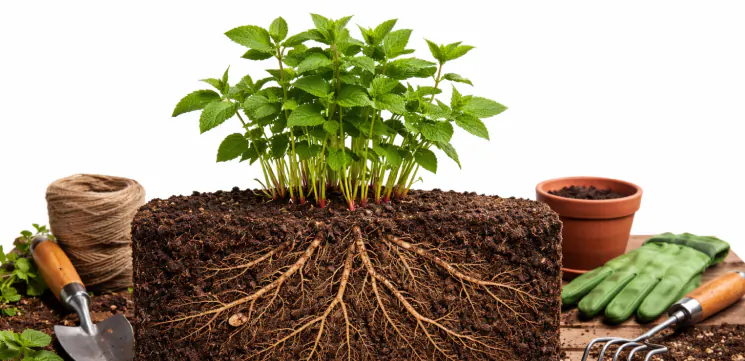
Simply put, feeding raspberries in spring is not just a box-ticking exercise. Let us go through, step by step, what and when to give your raspberry patch so that in summer you can hardly keep up with picking the berries.
Why spring feeding of raspberries is so important
In winter, raspberries use up a great deal of energy just to survive the frosts. In spring they need a powerful boost. This is when everything is set in place: the number of new shoots, the strength of the bush and, most importantly, the number of future berries. If you miss this moment, the raspberries will be weak and the harvest meagre.
Feeding raspberries in early spring is like a hearty breakfast for a marathon runner before a race. Fertilising raspberries in spring should support growth, not just "sit in the soil". And let us not forget the soil itself: the ideal pH for this crop is 5.6–6.5. So how to fertilise raspberries correctly depends not only on the choice of product, but also on understanding the condition of your soil.
What to feed raspberries with in spring after winter
First of all, as soon as the snow melts, you need to tidy up the raspberry patch: cut out dry branches and clear away old leaves. Only after that can you think about what to feed raspberries with in spring.
If the bushes are mature and grew well last year, they are usually given a moderate nitrogen or balanced feed for raspberries. If the soil is poor or sandy, or the bushes have come out of winter weakened, the question of what you can feed raspberries with becomes even more important. In such conditions the plants need enhanced nutrition.
When to feed raspberries
Feeding raspberries in spring is a matter of climate, not the calendar. Do not rush to apply fertilisers to frozen ground. The roots start working when the soil has warmed to at least +5 to +8°C. This is usually when the buds begin to swell but the leaves have not yet opened.
When to feed raspberries is something nature itself will tell you: as soon as the ground has become soft and the excess moisture has drained away, it is time to act. Remember: spring feeding of raspberries that is too early, into cold water-logged ground, works poorly, while feeding that is too late will not give the effect needed for the start of the season.
What to feed raspberries with for active shoot growth
At the beginning of the season the plant needs nitrogen. It is the main building material for stems and leaves. If you are looking for what to feed raspberries with in spring so that they grow quickly, use urea (carbamide) or ammonium nitrate.
Feeding raspberries for the future harvest
Greenery alone is not enough; we need berries. So spring feeding of raspberries must be balanced. An excess of nitrogen can produce too many leaves but little fruit.
How to feed raspberries correctly? Give nutrients in moderation. A little later, closer to May, the plant will need the elements responsible for flowering. For raspberries, steady care is more important than huge doses of fertiliser. So the best spring raspberry feed is the one that suits your particular bush.
Which fertilisers suit raspberries in spring
In general, organic, mineral and complex mixes are used for berry crops. Each option has its own advantages:
- Organic matter improves soil structure and acts gently.
- Mineral fertilisers work faster.
- Complex fertilisers are convenient because they contain everything needed at once.
Organic feeding (raspberry feed)
Raspberries adore organic matter. It is their favourite treat:
- Rotted manure or compost: simply spread it in a 5 cm layer around the bushes. It is both food and protection for the roots against drying out.
- Chicken manure: a very strong remedy. It must be diluted in water (1:20), otherwise you may burn the roots.
Mineral fertilisers
Organic matter is great, but it is hard to control the exact dosage with it. Mineral spring feeding of raspberries is a precise science. If you do not want to count the grams of each element, it is simpler to take a ready-made berry fertiliser and follow the instructions. The most commonly used are ammonium sulphate or superphosphate.
Complex spring feeding of raspberries
For those who value their time, there are ready-made mixes (nitrogen + phosphorus + potassium). This is probably the best spring raspberry feed, since it covers all the plant's needs at the same time.
Phosphorus-potassium fertilisers: when and why
If nitrogen is growth, then phosphorus and potassium are health and flavour. Phosphorus is needed for strong roots, while potassium makes the berry sweet and aromatic. Without potassium, raspberries often get sick and tolerate summer heat poorly.
They are usually applied a little later than the first portion of nitrogen. To the question of what to feed raspberries with, the answer is simple: nitrogen is needed for the start, and phosphorus-potassium mixes for the quality of the harvest.
Common mistakes
- Fertilising dry soil: always water the bushes with plain water first.
- Using fresh manure: it will burn the roots and bring weeds.
- Ignoring the condition of the bush: if the leaves are yellow, nitrogen is needed; if the edges look "scorched", potassium is lacking.
Conclusion
What to feed raspberries with in spring depends on the condition of your plants. The scheme is simple: first give nitrogen for shoot growth, then complex supplements for sweet berries.
Remember that it is better to fertilise raspberries in spring once correctly than five times at random. Have a great season and a sweet harvest!
How do you usually feed your raspberries – do you prefer proven "chemistry" or folk methods?
Read also
- German technologist: what to produce tomorrow?
- Yoghurt production: from delicate texture to new product concepts with Prodservis
- European Insight: Tastes, Trends and New Products
- Marbled Beef Reimagined: Technology for Creating a Higher-Value Product
- Fertilisers for houseplants: how to choose and use them
