Dough for frozen semi-finished products: causes of cracking and technological solutions
· 4 min read
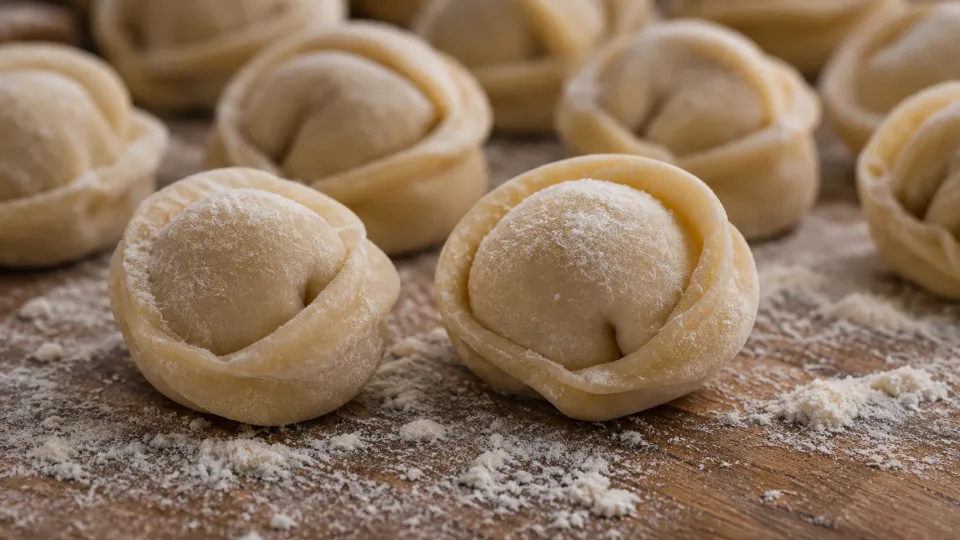
Thin, elastic dough, an even seam, a smooth surface and a juicy filling. For manufacturers of frozen semi-finished products, it is important to preserve these characteristics after freezing, storage and cooking.
Cracks on the surface, split seams and overcooked dough can result from the properties of the flour, shortcomings in the recipe, temperature fluctuations or moisture loss. Let us consider the main causes of these defects and the technological solutions for preventing them.
Forming: elasticity and seam strength
Dough for pelmeni, vareniki and khinkali must combine strength with plasticity: it should roll out without tearing, hold its shape and ensure a reliable seal at the edges.
Excessive stiffness makes forming difficult, while insufficient strength increases the risk of damage to the wrapper. For khinkali, the ability to hold pleats is important; for automated pelmeni production, a consistent dough thickness and seam quality matter.
Seal strength must be checked after freezing and boiling, when defects that are invisible on the production line may appear.

Freezing: the effect on dough structure
The elasticity and extensibility of wheat dough depend largely on the gluten structure formed during mixing.
During freezing, part of the water turns into ice, and the distribution of moisture between the components of the dough changes. The formation of ice crystals and their recrystallisation during temperature fluctuations can adversely affect the structure of the product.
The consequences depend on the quality of the flour, the recipe, the freezing conditions and the duration of storage. After cooking, undesirable changes show up as a loss of elasticity, tears in the wrapper or a disrupted texture.
Why frozen dough cracks
The main factors behind cracking:
- Insufficient strength or plasticity of the dough.
- Uneven distribution of moisture.
- Temperature fluctuations during storage.
- Drying of the surface.
- Mechanical damage during transport.
Even at sub-zero temperatures, ice can pass directly into vapour. This process is called sublimation. Moisture loss leads to drying of the surface, reduced plasticity and a higher risk of cracks.
A damaged wrapper may tear during boiling, causing loss of filling and a poorer appearance of the finished product.
PRODAMIX C911: improving the structure of frozen dough
To work on the structure of frozen dough, Prodservis offers PRODAMIX C911, a functional blend based on wheat gluten, wheat flour and enzymes. It improves the structure and appearance of frozen dough and helps prevent cracking during storage.
When developing a recipe, Prodservis technologists take into account the properties of the flour, the specifics of the equipment and the freezing conditions. The effectiveness of the solution is tested on the manufacturer's own raw materials, comparing the condition of the dough after storage and the quality of the finished products after cooking.

Dough and filling: moisture control
The dough wrapper and the filling may differ in water content and water activity. Under certain conditions, moisture migrates between them, which affects the structure of the adjacent dough layer and its behaviour during cooking.
To regulate the consistency of fillings, Prodservis offers:
- PRODAMIX MP304: a stabiliser for meat mince and fillings that improves their hot and cold firmness.
- PRODAMIX MP369: a stabiliser for fruit, vegetable, cheese and poppy seed fillings, designed to improve their consistency.
We will look at the technological specifics of fillings in more detail in the next article.
Pancakes and nalysnyky: freezing specifics
Unlike pelmeni and vareniki, the wrapper of pancakes and nalysnyky usually undergoes heat treatment before the filling is added and before freezing.
During baking, the structure of proteins and starch changes. Therefore, for ready-made pancake wrappers it is important to assess separately their elasticity when rolled, resistance to cracking, retention of softness after reheating and interaction with the filling.
How to assess the quality of frozen dough
| Indicator | What is checked |
| Elasticity and extensibility | Forming without tearing |
| Seam strength | Integrity of the edges after freezing and boiling |
| Crack resistance | Condition of the surface after storage |
| Behaviour during boiling | Retention of shape and integrity of the wrapper |
| Sensory characteristics | Texture, elasticity, stickiness and taste |
For an objective comparison of recipes, tests are carried out under identical conditions of production, freezing, storage and cooking.
Prodservis technological support
Dough cracking, weakened seams and changes in texture call for an analysis of the raw materials, the recipe and the production conditions.
Prodservis technologists help select ingredients and verify their effectiveness on the manufacturer's raw materials.
Are you planning to launch frozen semi-finished products, or do you want to reduce dough cracking in products you already make?
Contact Prodservis for a consultation on the use of PRODAMIX C911 and for technological trials.
For manufacturers: Mince, semi-finished products and pâtés
Products from the article
Read also
- Raw-smoked sausages: from classic salami to Mediterranean flavours
- Breading plant-based products: how to achieve a crispy crust and keep the juiciness
- Plant-based meat: how to achieve juiciness and a fibrous texture
- Lenten cabbage rolls, vareniki and cutlets: a plant-based range for the Nativity Fast
- Plant-based meat alternatives: how vegan burgers, schnitzels and sausages are made
