Plant-based meat: how to achieve juiciness and a fibrous texture
· Olena Lobach · 9 min read
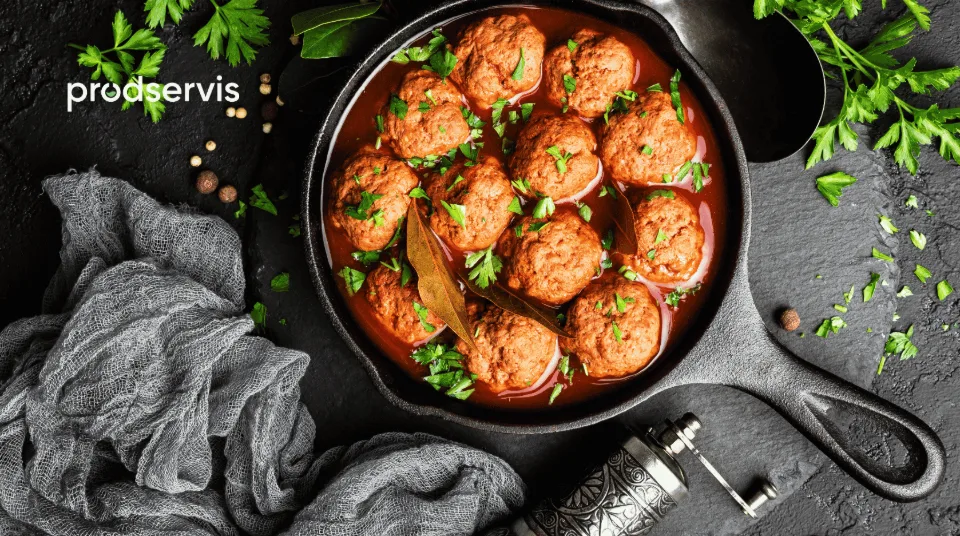
A juicy patty with a golden crust, a springy sausage with a characteristic bite, or tender pieces of plant-based meat that separate into fibres. Every product has its own texture, but it is largely what determines how convincing a plant-based alternative to traditional meat will be.
For manufacturers, this is one of the most difficult tasks in developing plant-based products. Plant proteins have a different structure and functional properties from muscle proteins of animal origin. Therefore, juiciness, springiness and characteristic fibrousness cannot be achieved through a high protein content alone.
The result depends on the combination of the protein base, the structure of the texturates, the system's ability to retain moisture and fat, functional ingredients and the specifics of production.
Why there is no universal texturate for plant-based meat
Meat has a natural fibrous structure formed by muscle tissue. During cooking, proteins change their structure, and the distribution of moisture and fat affects tenderness, juiciness and mouthfeel.
In plant-based alternatives, similar properties have to be created through technology.
For this purpose, proteins from peas, soy, wheat, rice and other plant sources are used. However, different proteins behave differently during hydration, heating and mechanical treatment.
Some make it possible to obtain a dense structure, while others are better suited to creating tender fillings or pronounced fibrousness. What matters is not only the origin of the protein, but also the way it is pre-processed, its fraction and its functional characteristics.
That is why there is no universal texturate for all plant-based meat alternatives.
Fibrous texture: how plant protein acquires a meat-like structure
One of the key technological solutions for creating plant-based meat is protein texturisation.
During extrusion, plant protein raw material is subjected to thermal and mechanical treatment. The proteins change their spatial organisation and, under appropriate conditions, form structures capable of imitating certain characteristics of muscle tissue.
Modern technologies make it possible to obtain texturates with different density, porosity and degree of fibrousness. For the manufacturer, this means the opportunity to work with different product formats:
- Plant-based mince. Fine fractions of texturates are suitable for cutlets, meatballs, and fillings for pelmeni, vareniki and pancakes. In such products, uniformity of the mass, juiciness and the ability to hold its shape are important.
- Burgers and formed products. The protein base must provide a characteristic meat-like texture, juiciness and springiness when bitten, and also keep the product's shape during heat treatment.
- Chunk-style meat alternatives. For products imitating pieces of chicken or other types of meat, the fibrous structure is of particular importance. It determines how the product separates when bitten and chewed.
- Plant-based sausages and frankfurters. Here, uniformity of structure, elasticity and the characteristic Knack effect are important, that is, the characteristic juicy crunch or snap when biting into sausage products.
Thus, the choice of texturate begins with understanding what the finished product should be like: tender, dense, springy, fine-grained or distinctly fibrous.
Juiciness of plant-based meat: why simply adding water is not enough
Juiciness is formed not only by the amount of moisture in the recipe. What matters is how it is distributed inside the product, how firmly it is held by the protein system and how it is released during consumption.
A plant-based patty may contain enough water but seem dry after frying. Another problem arises when the recipe does not retain moisture sufficiently and does not ensure proper binding of the components: during cooking the product loses its juiciness and may crumble and fall apart.
For the manufacturer, this means the need to work with several characteristics at once.
- Water-binding capacity. Proteins and functional components must retain moisture in line with the requirements of the specific product.
- Distribution of the fat phase. Vegetable oils and fats influence the perception of juiciness, tenderness and the overall impression of the product. Their behaviour depends on the composition of the recipe and the stability of the food system.
- Structural integrity. During heating, the product must retain the required shape and consistency without excessive compaction or loss of moisture.
- Sensory perception. What matters is not only the actual water retention, but also how juicy the consumer perceives the product to be when biting and chewing.
Thus, juiciness should be assessed together with texture, the yield of the finished product and the behaviour of the product after cooking.
Plant protein texturates: how to choose a base for the product
Prodservis's portfolio includes plant-based texturates made from peas, soy, rice and combined protein systems.
Each category opens up opportunities for developing products with different characteristics.
Pea texturates
Pea protein is used to create plant-based meat alternatives, including mince, patties, fillings and formed products.
Depending on the characteristics of the texturate, the manufacturer can work on density, graininess and the pronouncedness of the structure.
Among Prodservis ingredients is Prodamix pea texturate from the French manufacturer VAN HEES. The ingredient is made from extruded pea protein with a protein content of at least 66%. Thanks to its neutral taste and aroma, it is suitable for various mince systems, allowing manufacturers to shape the desired flavour profile of the finished product.
Soy textured proteins
Soy protein is widely used in the production of plant-based alternatives thanks to its ability to form structured protein systems.
Soy textured proteins can be used to create plant-based mince, fillings and other products where a characteristic texture and mouthfeel during chewing are important.
The Prodservis portfolio includes two textured proteins for creating plant-based meat alternatives. Chunks Prallo makes it possible to reproduce the dense, springy structure of meat pieces, while Slices Prallo come in the form of slices and have a neutral flavour that combines well with a variety of spices and marinades. Both ingredients expand the possibilities for producers in creating plant-based dishes with a distinct meat-like texture.
Soy-wheat textured proteins
The combination of soy and wheat proteins makes it possible to work on the springiness and fibrous quality of plant-based alternatives. Such ingredients can be relevant for products that require a distinct meat-like structure and a characteristic bite.
The Prodservis portfolio includes Soy-wheat textured protein SUPRO MAX 5050 IP from VAN HEES. Its neutral flavour and aroma allow you to experiment with spices and create a variety of flavour profiles, from delicate chicken to rich, spicy meat notes. Thanks to a protein content of at least 71%, the textured protein also helps in developing plant-based alternatives with high protein value.
Rice textured proteins
Rice textured proteins make it possible to create plant-based alternatives to fish products with a delicate, fine-grained structure close to traditional fish mince. Thanks to their light colour and neutral flavour profile, they are suitable for developing products where it is important to preserve a delicate texture and highlight the characteristic fish flavour notes.
The Prodservis portfolio includes Rice textured protein Rice Texturate Prodamix from VAN HEES. Its fine fraction makes it possible to reproduce the structure of fish mince, while the neutral flavour and aroma provide a basis for a variety of flavour solutions. The ingredient can be used in developing plant-based fish cutlets, croquettes and other formed products.
Sunflower textured proteins
Sunflower protein is another source of plant protein for creating meat alternatives. Textured proteins based on it can be used in mince systems, helping to form the structure of plant-based cutlets, burgers and other formed products.
The Prodservis portfolio includes Sunflower textured protein from VAN HEES with a protein content of 51.6%. Made from sunflower protein meal, it allows you to broaden the choice of protein raw materials for plant-based recipes and to develop products free from animal-derived components.
Functional blends: how to work with springiness, shape retention and juiciness
Even a correctly selected textured protein does not always provide all the properties required of the finished product.
For plant-based burgers, it is important that the patty retains its shape and juiciness during frying. Sausages require appropriate density and springiness. Plant-based balls must remain intact during cooking and when combined with sauces.
Specialised functional blends are used for such tasks.
Depending on their composition and purpose, they help to work on the binding of components, the stability of the food system, consistency, moisture retention and the characteristics of the finished product.
Prodservis offers functional blends for various plant-based alternatives:
Burger Patty P Prallo for developing plant-based patties.
Burger Spice Combi Vegan for vegan burger product concepts.
Veggie Balls for plant-based balls and meatballs.
Hot Dog Combi Vegan for plant-based hot dog alternatives.
Schnitzel Combi Vegan for vegetarian schnitzels.
Fish Croquette Combi Vegan for fish product alternatives.
The specific set of technological properties depends on the composition of the blend and the recipe of the finished product. Therefore, the selection of ingredients requires evaluation under the conditions of the relevant production.
How to assess the texture quality of plant-based meat
When developing plant-based meat alternatives, it is important to assess not only appearance and flavour, but also the behaviour of the product after heat treatment. Even with the same protein content, different recipes can differ significantly in density, juiciness and mass loss.
Several indicators are used for an objective comparison of samples:
Mass loss during cooking (cooking loss): shows how much moisture and other components the product loses after heat treatment.
Texture profile (TPA): an instrumental analysis of hardness, springiness and cohesiveness of the structure, which helps to compare different recipes.
Water-holding capacity (WHC): characterises the ability of the protein system to retain moisture.
Sensory evaluation: makes it possible to determine how juiciness, fibrousness, springiness and bite are perceived.
For frozen semi-finished products, the behaviour of the product after freezing, storage and subsequent cooking is additionally assessed.
Combining instrumental measurements with sensory evaluation helps the producer determine which recipe changes genuinely improve the characteristics of the product and which only affect individual laboratory indicators.
Plant-based meat alternatives from Prodservis: from choosing a textured protein to the finished product
The development of plant-based meat begins with a specific product concept. Prodservis technologists help producers choose the protein base, select functional components and evaluate how they perform in a particular recipe.
Read more about product formats and the range of ingredients in the article "Plant-based meat alternatives: how vegan burgers, schnitzels and sausages are created".
Planning to develop a plant-based burger, sausage, schnitzel or a product with a distinct fibrous structure?
Contact the Prodservis technologists. We will help you select ingredients in line with your product concept, adapt the recipe to production conditions and carry out technological trials.
For manufacturers: Alternative meat
Products from the article
- Burger Spice Combi Vegan Prodamix
- Burger Patty P Prodamix
- Fish Croquettes Combi Vegan Prodamix functional blend
- Schnitzel Combi Vegan Prodamix functional blend
- Functional blend Hot Dog Combi Vegan Prodamix
- Veggie Balls Prodamix
Read also
- Plant-based meat alternatives: how vegan burgers, schnitzels and sausages are made
- The Future of the Meat Business: An Expert View from Ivan Sierov, Development Director at Prodservis
- Heat-stable cheese for production: from cheese sausages to grilling products
- Lenten cabbage rolls, vareniki and cutlets: a plant-based range for the Nativity Fast
- Prodservis at Agro2Food 2026: ingredients, technologies and solutions for food production
