We need to count… 34 years. Yes, 34 years in spices. That’s a long time,
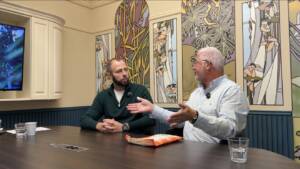
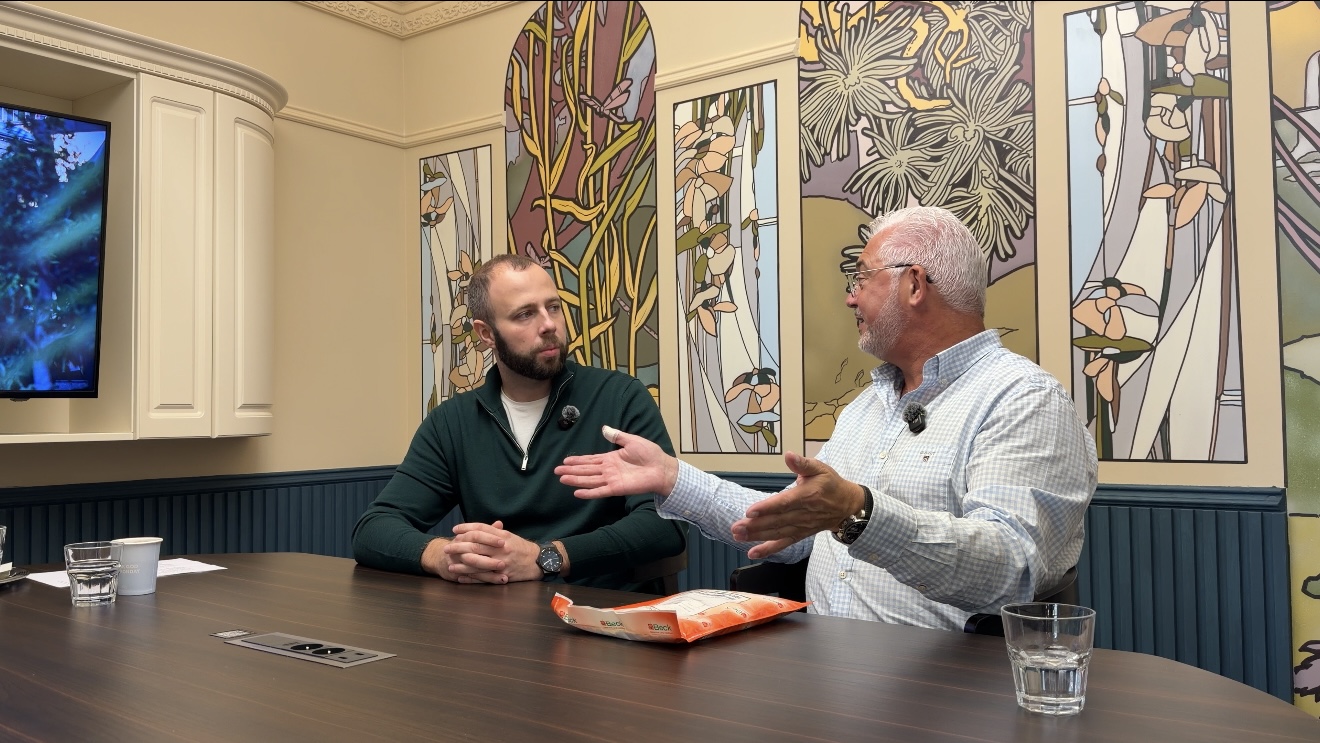
Stefan Füller laughs at the beginning of his conversation with Ivan Serov, Business Development Director at Prodservis.
If we count his professional education and all the previous stages, Stefan has already been in the food business for 41 years. His journey began long before he started working with international markets. As a young man, he chose the profession of butcher, received specialized professional training and worked in the profession for more than eight years in different regions of Germany, including some of the country’s best butcher shops.
Today, Stefan Füller is responsible for Beck Gewürze & Additive operations in 14 international markets. In some weeks, his schedule may include at least eight flights, not counting travel by car and train. A significant part of his working week is taken up by meetings with manufacturers, technological discussions and travel between countries. His observations are based not only on the company’s internal developments, but also on constant contact with production facilities, local products and different consumer tastes.
That is why we decided not to ask Stefan to predict the future of the food industry. It was much more interesting to ask him about what he is already seeing at production facilities and on store shelves in different countries.
The result was a conversation about meat snacks, convenient formats, differences in taste between countries, small and large production facilities, and one problem that seems to be the same everywhere: wine intended for a marinade sometimes never makes it into the marinade.
Experience Without Borders: What Different Markets Teach Us
When asked about R&D, Stefan quickly rejects the role of someone who comes to a client and tells them how to make a product correctly.
I’m not a teacher and I will not say I’m the best around the world. I learn each day from each other person in the companies.
His view of the market is formed through constant work with different production facilities during such trips. One manufacturer shows him its technology. Another comes with an unusual request. A third tastes a product and asks to make it less spicy, sweeter or to add more paprika.
At Beck, these requests go back to the R&D team and to the pilot production facility, where a new combination of spices can be tested or an existing solution can be adapted.
And Stefan, it seems, is not particularly fond of lengthy email exchanges. If an issue can be resolved by calling a technologist, he prefers to call immediately: the client needs an answer, not another ten emails.
What Is Changing in the Product Range of European Manufacturers
When we asked Stefan about new products in recent years, he immediately warned us that there was no one-word answer.
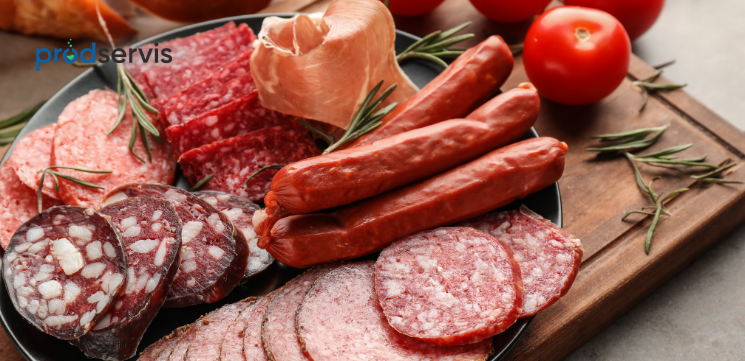
Among the categories that attract his attention, he mentioned salami snacks, jerky, ready meals, convenient packaging, products for air fryers and high-protein products.
But almost immediately, the conversation shifted away from a list of fashionable categories and towards the reasons for their emergence. People have less time. Food has to be easier to use.
That is why, for today’s consumer, an ordinary piece of meat and sous-vide meat are already two different products, even if they are based on the same raw material. The second option saves time, provides a predictable result and requires significantly fewer actions at home.
During his trip around Ukraine, Stefan also paid attention to our shelves.
When I go in a supermarket, it is for me a paradise to see what you produce.
He specifically noted the amount of sliced products and suggested that such formats would receive more attention in the future precisely because of their convenience for consumers.
A person buys an already prepared product and spends less time on it.
For a Ukrainian manufacturer, this is an interesting clue: a new product does not always mean new raw materials or a fundamentally new technology. Sometimes added value can be created simply by changing the way a familiar product reaches the consumer.
A Trend Grows First. And Then?
Stefan looks at high-protein products more calmly than one might expect from someone who sells ingredients and who, theoretically, should support any new product wave.
His logic is simple: trends have a life cycle.
First, a category grows. Everyone wants the new product. Manufacturers expand their ranges. Then the market stabilizes, and eventually some of the initial excitement disappears.
He has already observed this dynamic, in particular, with vegetarian and vegan products. Of course, for a manufacturer, this is not an argument against high protein, vegan or any other new direction. It is an argument against the decision: “Everyone is doing it, so we need to do it too.”
Especially if a new product requires new equipment.
Stefan describes the scale trap well: a small manufacturer wants to grow, but the next step requires major investment. A large enterprise has a different problem: its equipment requires volume. A line designed for hundreds of kilograms is not particularly well suited to a small experimental batch.
You have companies, they are too small but they want bigger. And then you have companies, they are too big – they cannot small.
Stefan’s slightly broken English conveys the point even better here: there are companies that are still too small but want to become bigger. And there are those that have already become so big that they cannot be small.
For product development, this is a very real limitation. The idea may be interesting and the demand promising, but the production scale of the enterprise may not allow it to be properly tested.
Small Batches, Big Opportunities
One of the distinctive features of Beck Gewürze & Additive is its ability to produce practically any blend with a minimum batch size starting from 25 kg. For a distributor or manufacturer, this significantly reduces the risk when testing a new product. A company does not need to immediately purchase a large volume of an ingredient and build up stock that may remain unsold.
A small initial batch makes it possible to test the recipe under production conditions, assess the market response and only then move on to larger orders. This approach is particularly important for new or niche products for which demand is difficult to predict at the beginning.
The company’s second distinguishing feature is the creation of customized blends for manufacturers and distributors. A development can take into account specific raw materials, the technological process, the desired flavor profile, labeling requirements and the characteristics of the local market. As a result, the client receives not a universal catalogue item, but a solution adapted to its specific task.
At the same time, Beck Gewürze & Additive’s core range includes more than 6,000 SKUs for meat processing and other areas of food production. The combination of a broad portfolio, small minimum batch sizes and in-house development enables the company to work both with standard requests and with products that are only preparing to enter the market.
How Jambalaya Travelled from Louisiana to Sweden
When the conversation turns to the creation of new products, Stefan recalls one of his favourite examples.
I can tell you one product I love. I love it really. Our Jambalaya.
The story began with a Swedish client.
He came with the idea of Jambalaya, a dish from the American state of Louisiana based on rice and spices. Beck created its own flavor profile for this idea. Clients liked the product, it began to be used in various developments, and Stefan himself continued to promote this direction in other markets.
What makes this story interesting is not its exotic name. It shows how a product idea travels between countries. Louisiana provided the dish. A Swedish manufacturer saw an opportunity in it. A German ingredient developer adapted the flavor profile. Then one idea began to evolve into different products for different clients.
For one client, the original flavor seems too spicy, so the heat is reduced. Another wants more paprika. A third needs chili.
And then Stefan delivers a line that is worth leaving untouched by corporate editing:
Not Frankfurt number one, Frankfurt number two, Frankfurt number three… Give a child another name and you have a new child.
There is no need to create “Frankfurt No. 1, Frankfurt No. 2 and Frankfurt No. 3.” Sometimes a familiar technological base, a different flavor profile, a new idea and a new name already allow you to look at a product differently.
Of course, simply renaming a sausage is not enough to create an innovation. But the Jambalaya story itself illustrates a different approach to R&D: looking for ideas beyond the boundaries of your traditional category.
Author’s note. Product development at Beck Gewürze und Additive is headed by Rolf Sommer, a qualified food technologist with many years of experience in the food industry. Before joining Beck, he held the position of R&D Manager at Frutarom Savory Solutions, whose structure included Gewürzmüller, a well-known manufacturer of spices and functional solutions. At Beck, Rolf Sommer is responsible for developing new product ideas and technological solutions for the company’s clients.
Taste Has No European Passport
After 34 years of working with spices, Stefan has clearly seen one thing: there is no universal “European taste.”
One market prefers more garlic. Another prefers a more pronounced meaty profile. Somewhere more heat is needed, while somewhere else the chili has to be removed.
This can be seen even in marinades. For the Baltic countries, Beck developed fruity profiles, as well as variations with pumpkin, plum, black garlic and other flavors.
So finding a successful product in Germany, Sweden or Lithuania is only half the job. The second half begins with the question: what part of this idea will taste good specifically to our consumer?
This is where the main risk lies for those who want to transfer a European recipe to the Ukrainian market. The technological basis can be taken over unchanged. But the flavor profile must be tested again, specifically for your own consumer.
Wine in the Marinade. Theoretically
Over the course of an hour and a half of technological discussion, there were spices, starter cultures and marinades.
While discussing Sweet American Honey, Stefan explains that apple juice, beer or wine can be added to the recipe. And immediately gives a production warning:
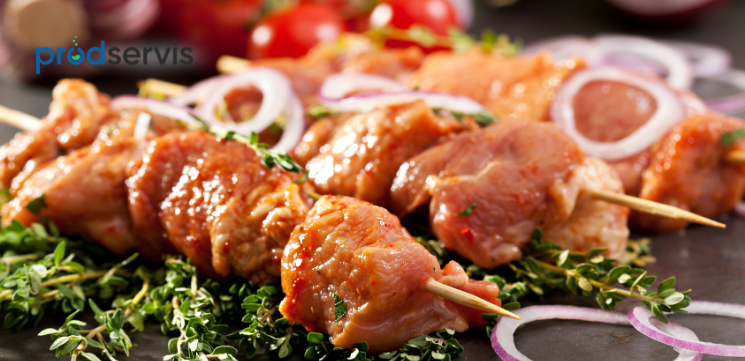
But be careful with wine and beer. Mostly the beer and the wine is in the man who is mixing this and not in the marinade.
Perhaps not the most important technological advice of the entire conversation. But definitely one of those that will be remembered.
What Should a Ukrainian Manufacturer Take Away from This Conversation?
After many years of experience in the food business, Stefan Füller does not offer a single prediction that can explain the future of the food industry.
His experience suggests something else:
- New opportunities often emerge at the intersection of a familiar technology and a new consumption scenario.
- Meat becomes a snack.
- A familiar cut becomes a sous-vide product.
- A home air fryer creates its own requirements for a product.
- The idea of a Louisiana dish, through a Swedish client, turns into a new flavor profile in Germany.
- A meat-processing company begins to look at pet food as a separate direction with higher added value.
- And a product that sells extremely well in one country has to be changed for another simply because people prefer different tastes.
So the question “What will the next trend be?” may not be the most useful one. For a manufacturer, it is more practical to ask: what new consumer need can we meet with what we already know how to do well?
This is where a product idea begins. And technology comes next.
That will be the subject of the second part of our conversation with Stefan: why a new ingredient may “not work,” what happens to a recipe when the amount of fat or salt changes, why testing needs to be carried out under controlled conditions, and what, in practice, he means by his short phrase:
Try it. Do it. Taste it.